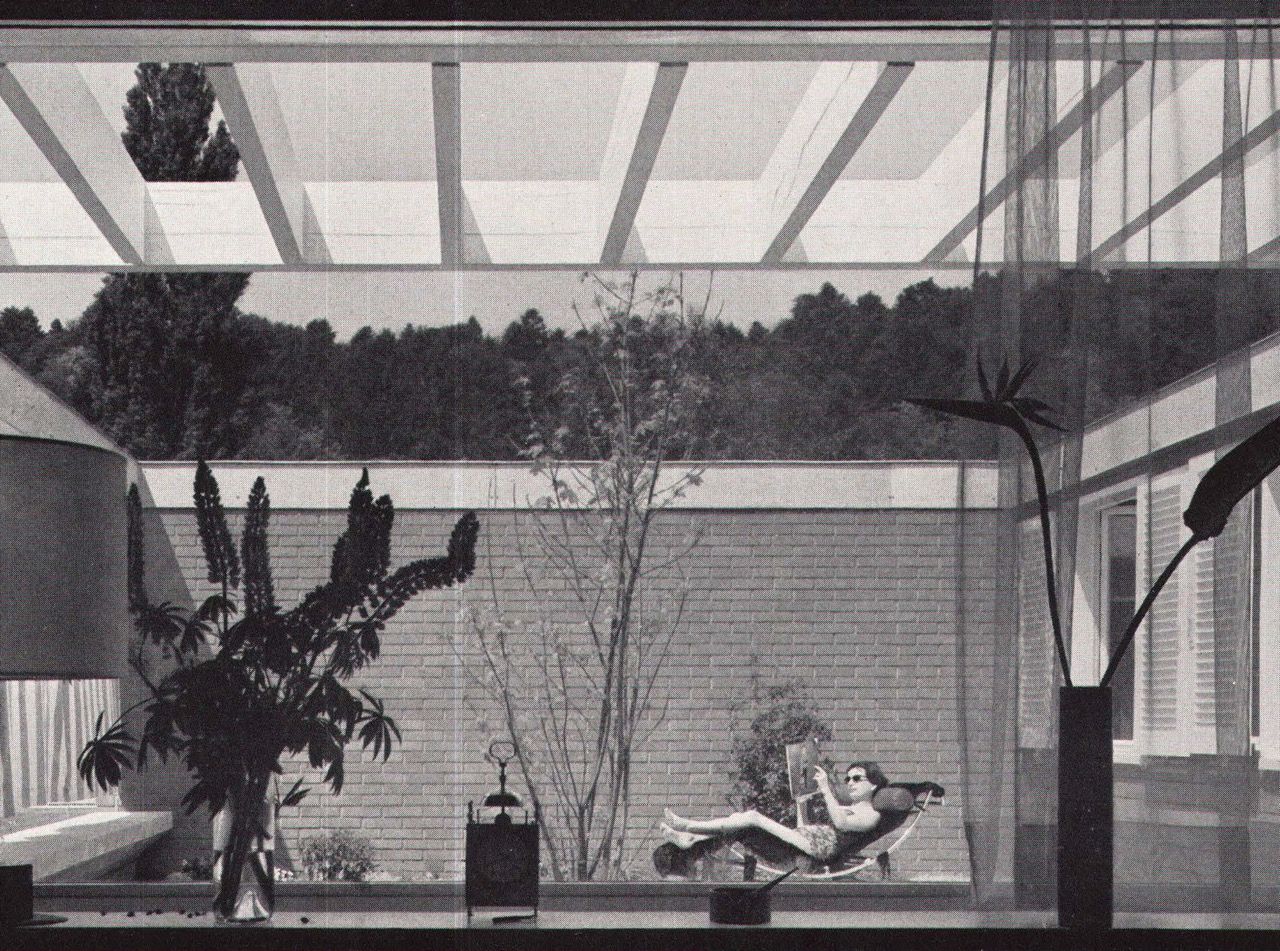
Life in Arcadia, on the Edge of Basel
Reinach, estate In den Gartenhöfen: atrium house no. 5 for sale – the home of architect Ulrich Löw
Ulrich Löw designed together with office partner Theodor Manz the single-family housing estate In den Gartenhöfen. Built between 1959 and 1962, the houses continue to offer Arcadian qualities in 2025 – peace and composure.
Request Documentation
Details
Status
For sale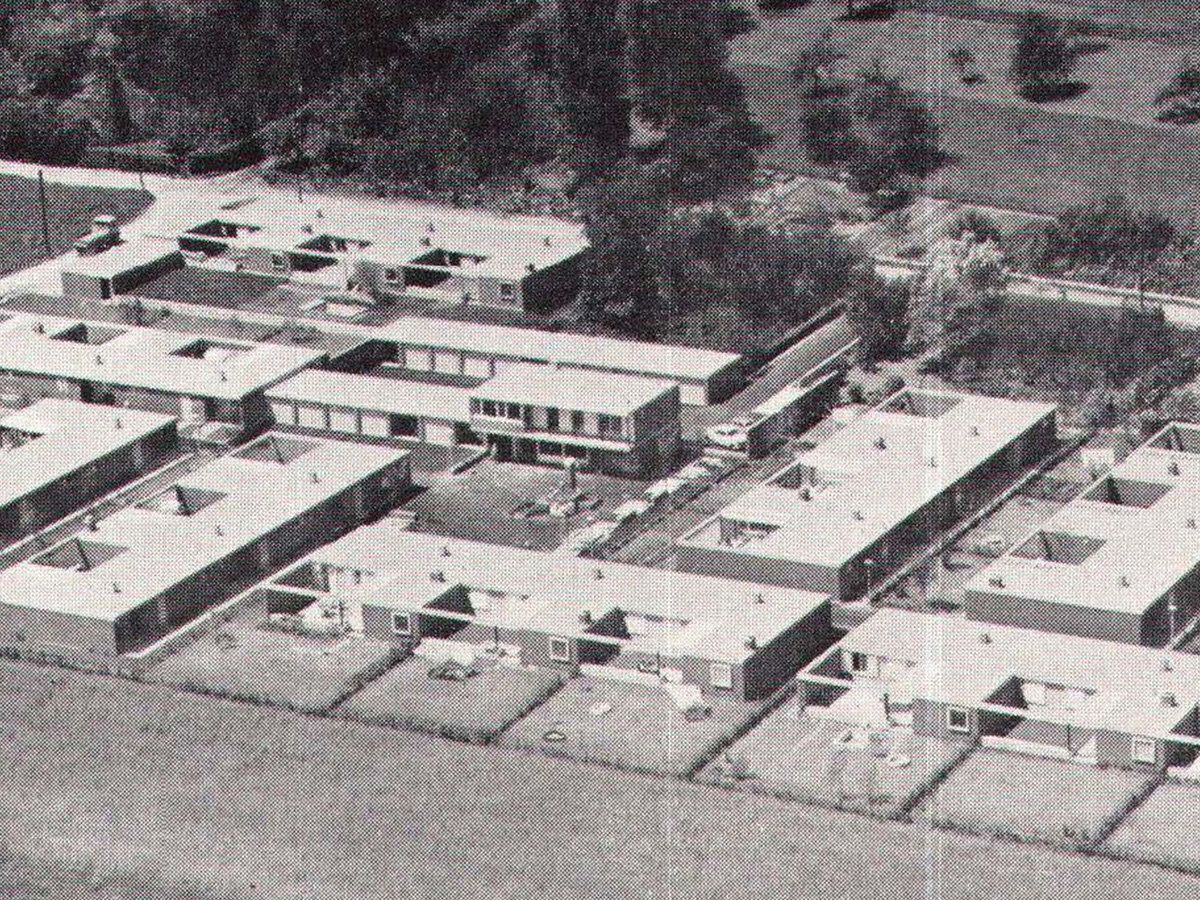
House no. 5 – the spirited original
The Löw family home has been preserved in its original form. It’s part of the compact estate consisting of 41 units: pragmatically modern, harmonious and with a focus on privacy. An uncluttered, very Swiss interpretation of the swinging Sixties. The estates’ unpretentious flair has charm. Built optimism from an era defined by vertical ambition.
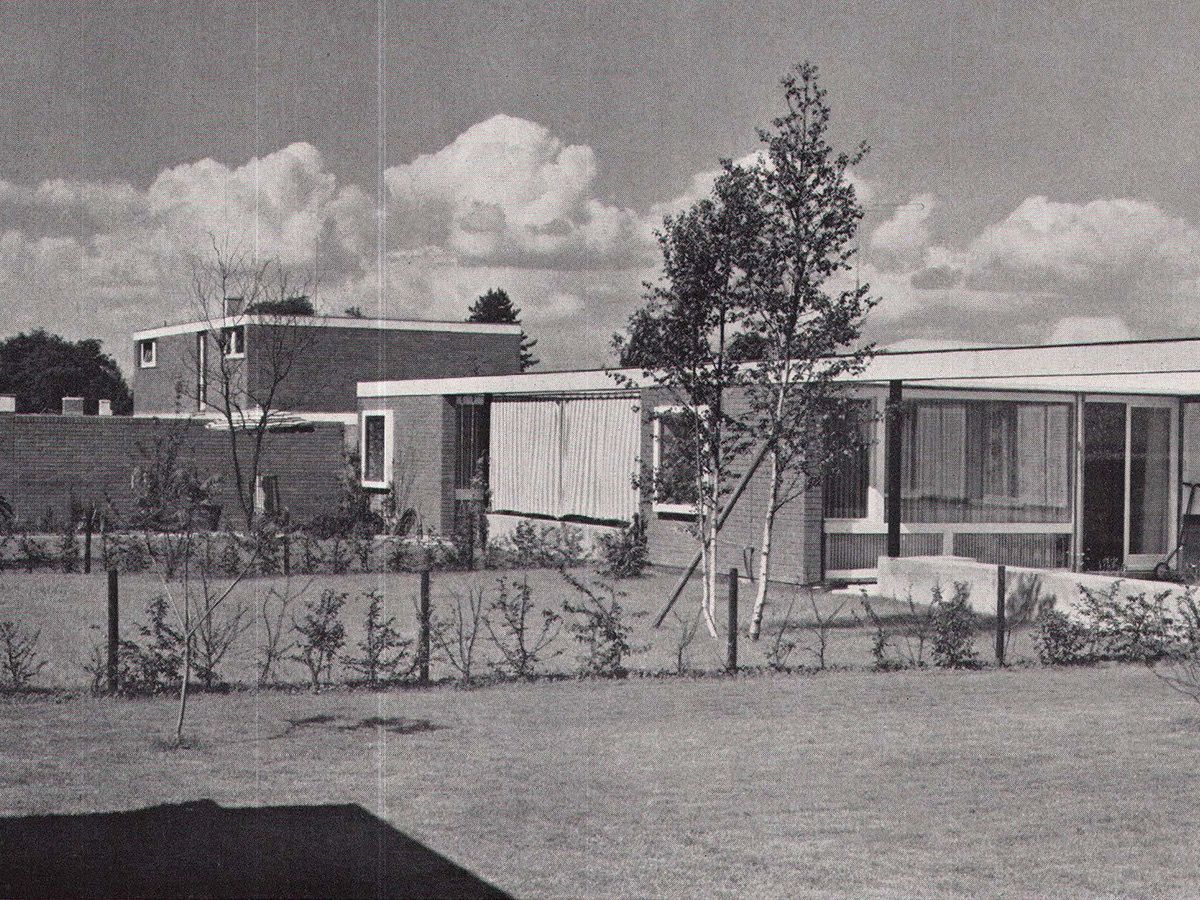
Quality of life on 112 m²
The Löw children grew up in house no. 5. After moving in, the parents spent their entire lives here. In 2020, the children sold their father’s masterpiece to the current owners.
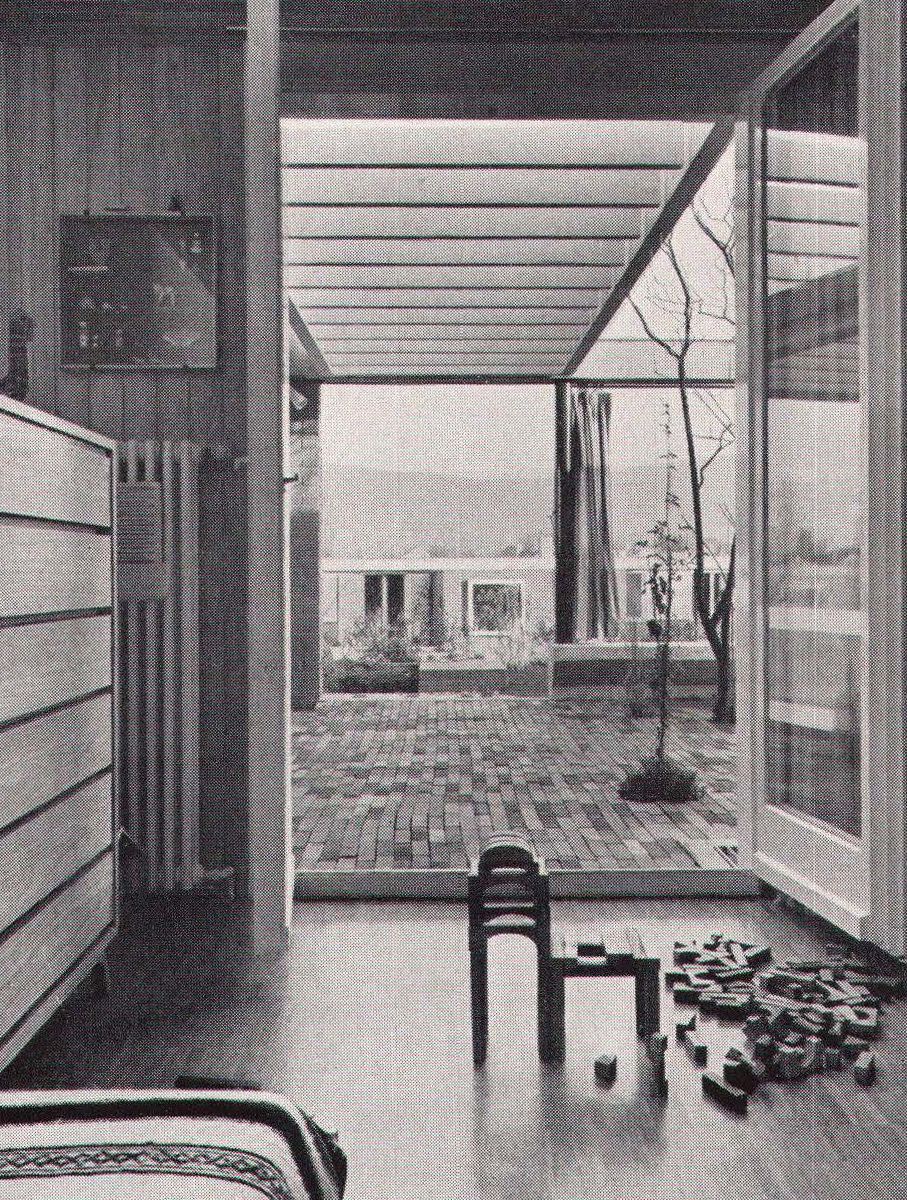
Inside, outside
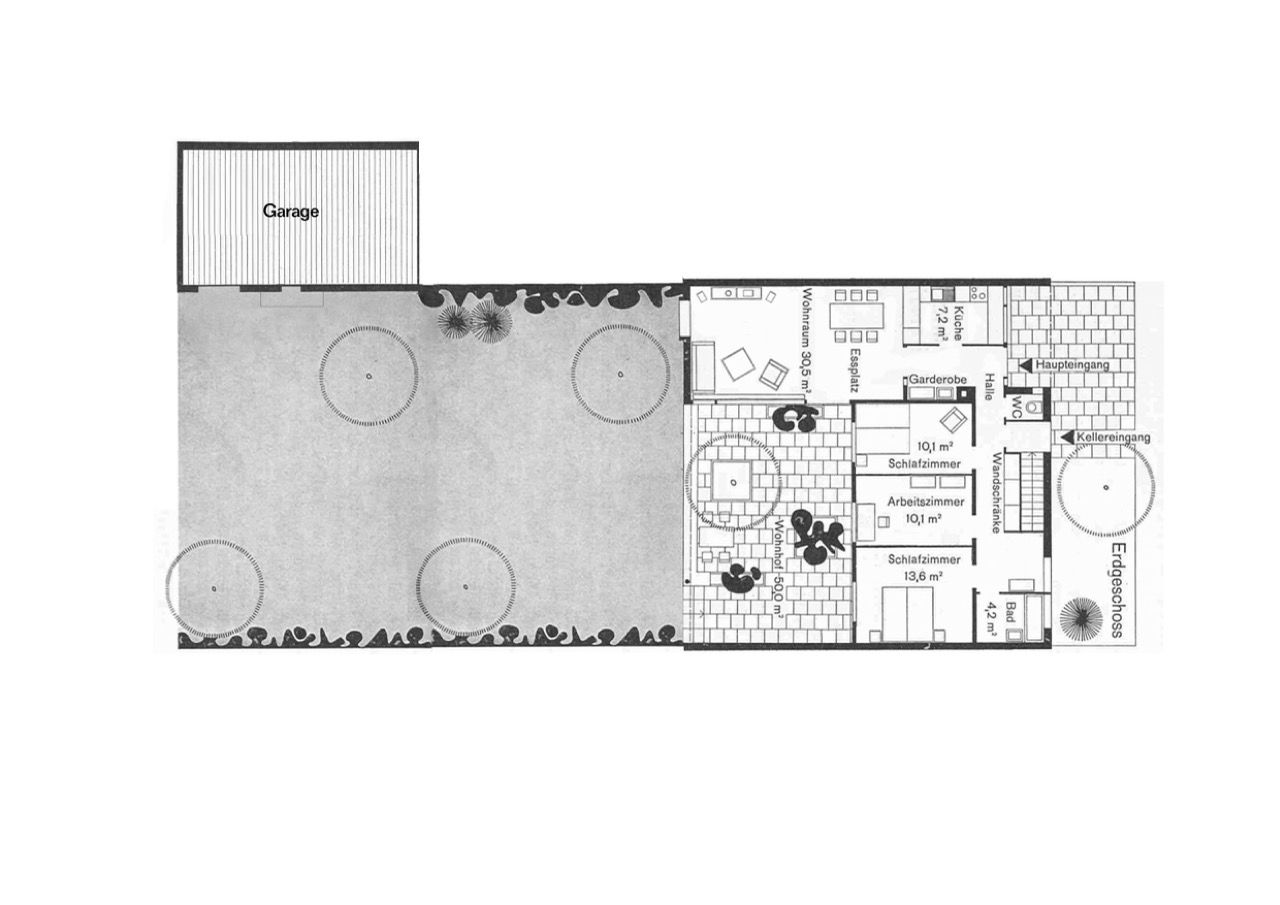
The central atrium is framed by the building on two sides, creating an L-shaped living plan. The atrium opens onto a generous, mature garden. The single-storey houses are organized in clusters of three, and interlinked with other clusters through green spaces, paths, garage structures, and a central “village square”. This is a spatial configuration that establishes clear orientation within the diverse surroundings. Behind the estate we enter a sheltered idyll close to the Bruderholz forest, which, 65 years after construction began, still conveys the joy of feeling at home.
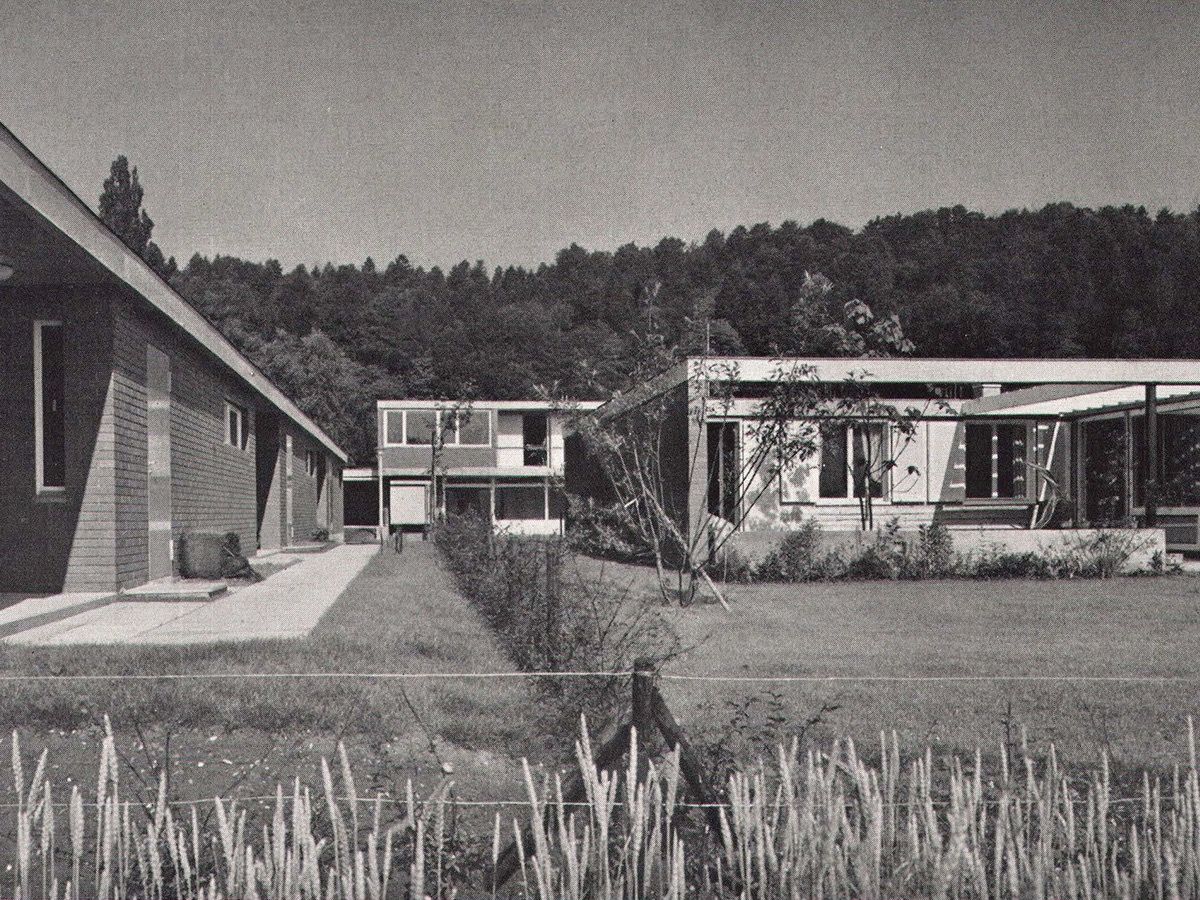
A listed pioneer project, still relevant today
The atrium estate In den Gartenhöfen is a pioneering project with an exemplary density, which remains significant today. The innovative Gesamtkunstwerk, offering timeless residential qualities, is protected at cantonal level. Both building and landscape design have stood the test of time. Wolf Hunziker was responsible for landscaping the outdoor areas and individual private gardens.
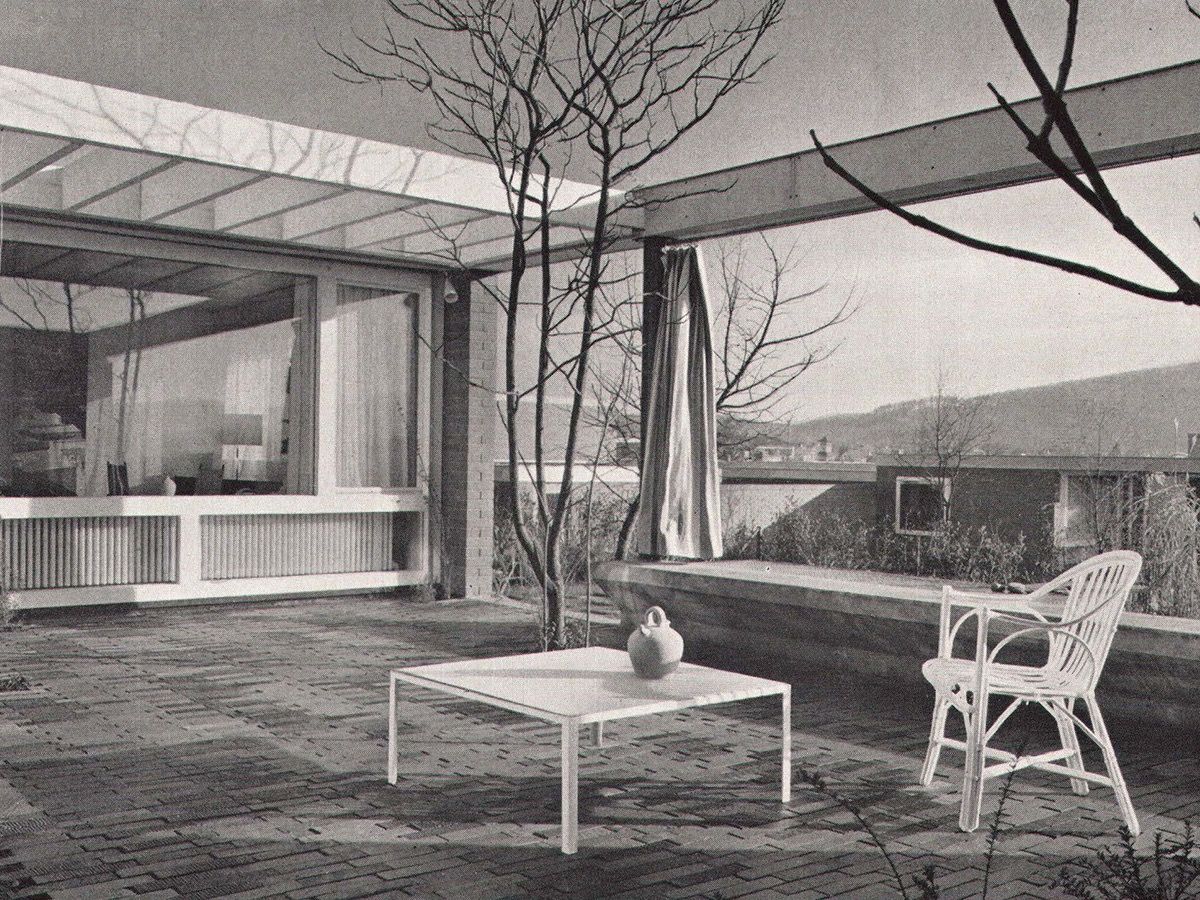
Dense single-family housing – role models
Arne Jacobsen’s Søholm row houses and Jørn Utzon’s Kingo houses, both located in Denmark, likely inspired Löw and Manz in developing the estate.
These prototypes for compact single-family living remain relevant because they approach the ideal of family life in a protected setting. I fondly recall the unique spirit of living in my former studio house on Eduard Neuenschwander’s estate in Gockhausen.
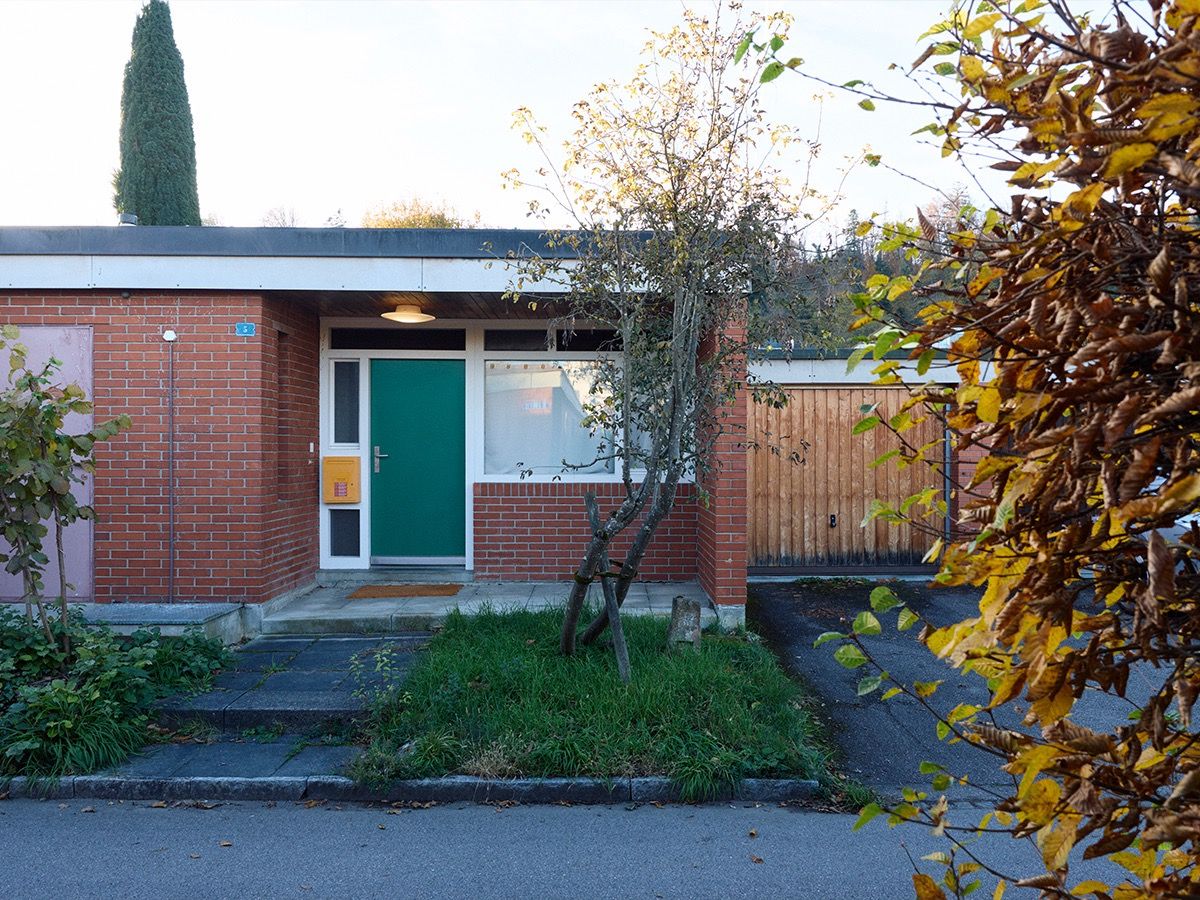
Harmonious introduction
The generous, fully covered entrance platform is a geometric composition. Framed by red bricks, the white timber construction holds seven window modules, the green-blue field of the entrance door, plus the yellow letterbox.
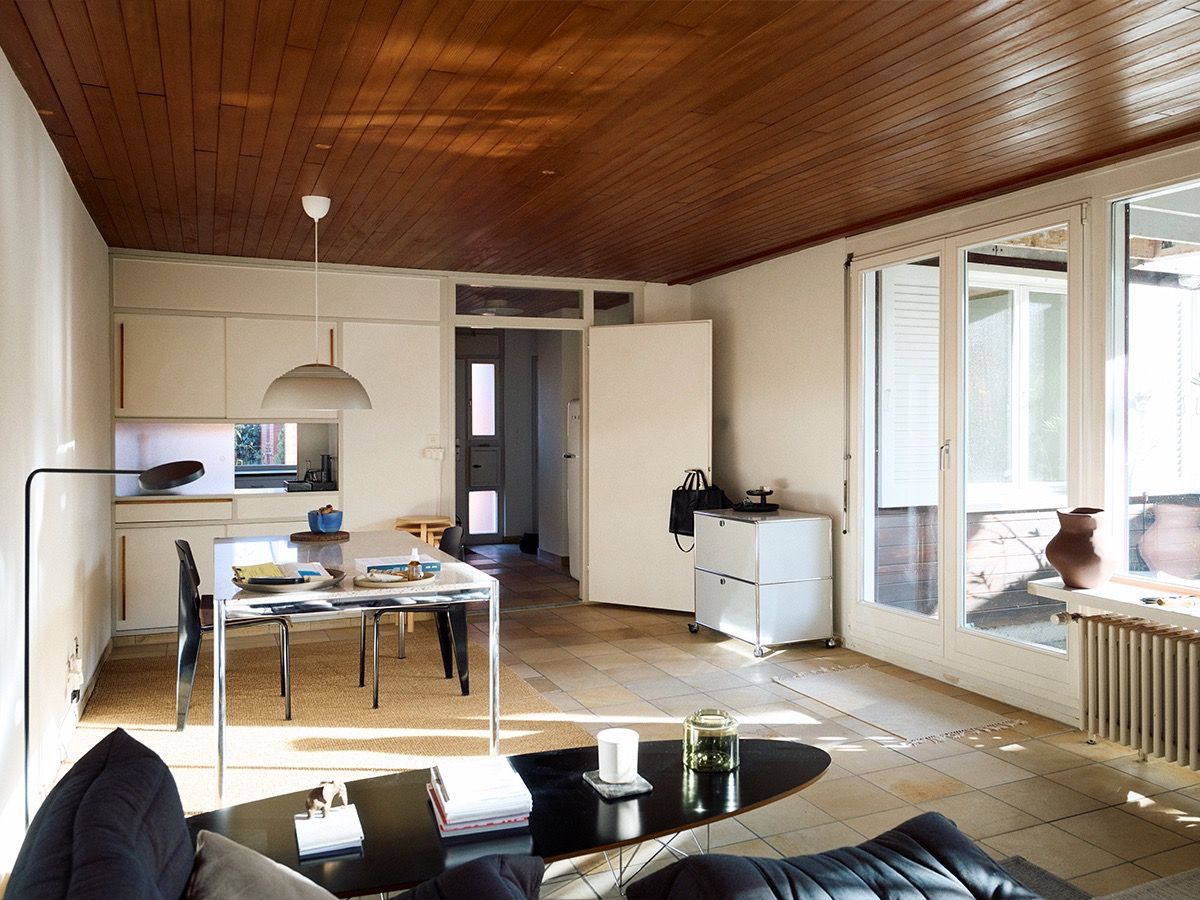
Ideal home
A pleasant, well-usable layout. Built-in wardrobes, a cloak area, kitchen and bathroom fixtures make the house move-in ready. Materials are simple and durable. Floors are laid with Solnhofen natural stone slabs. Exception: the new linoleum in the bedrooms, again using the original material.
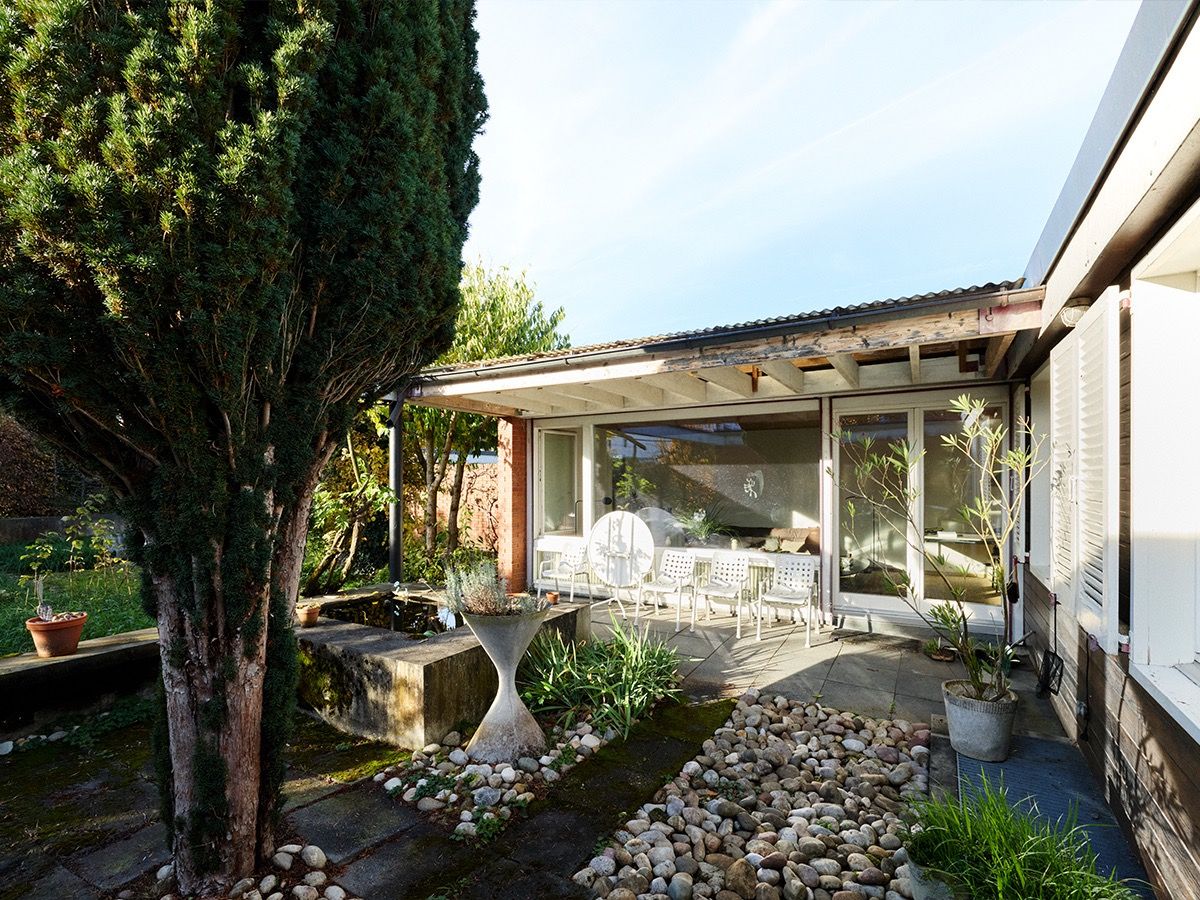
Atrium, oh atrium
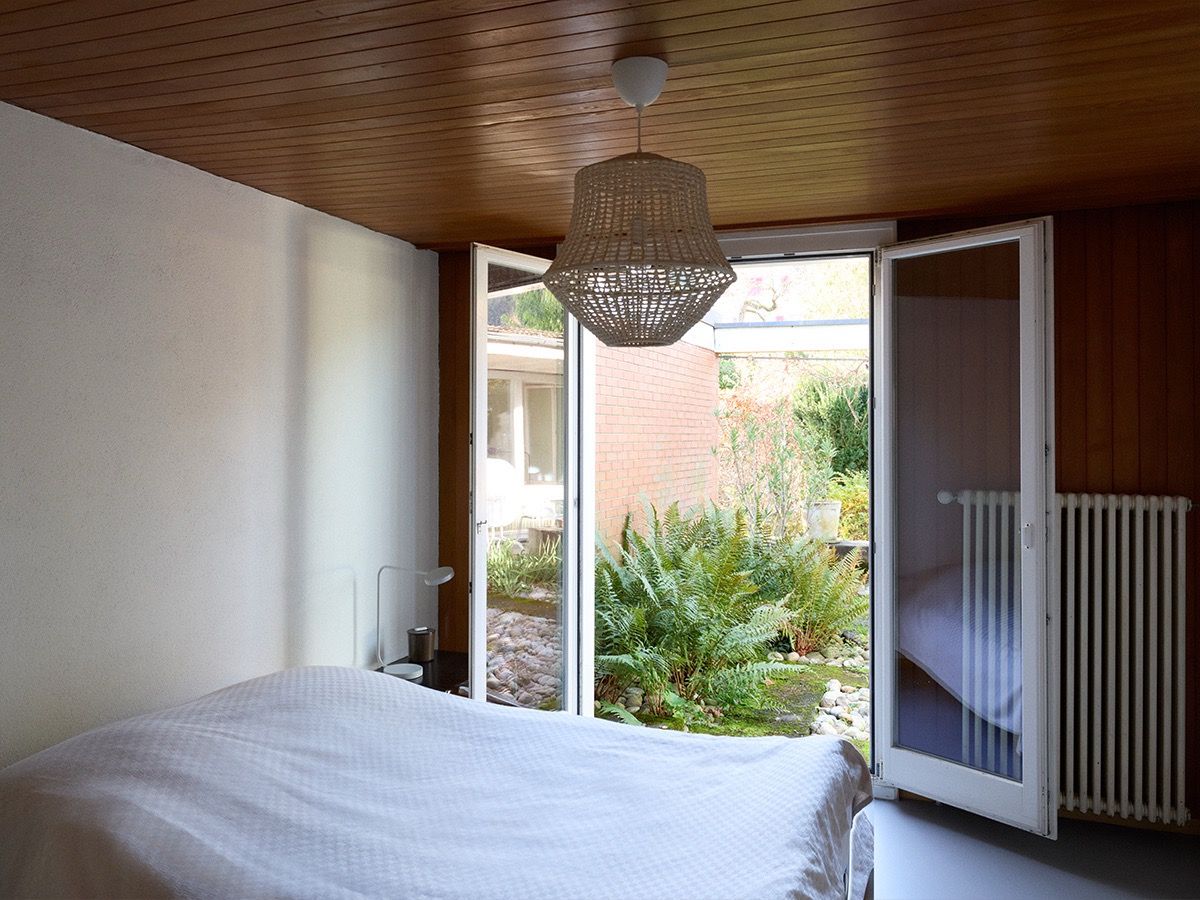
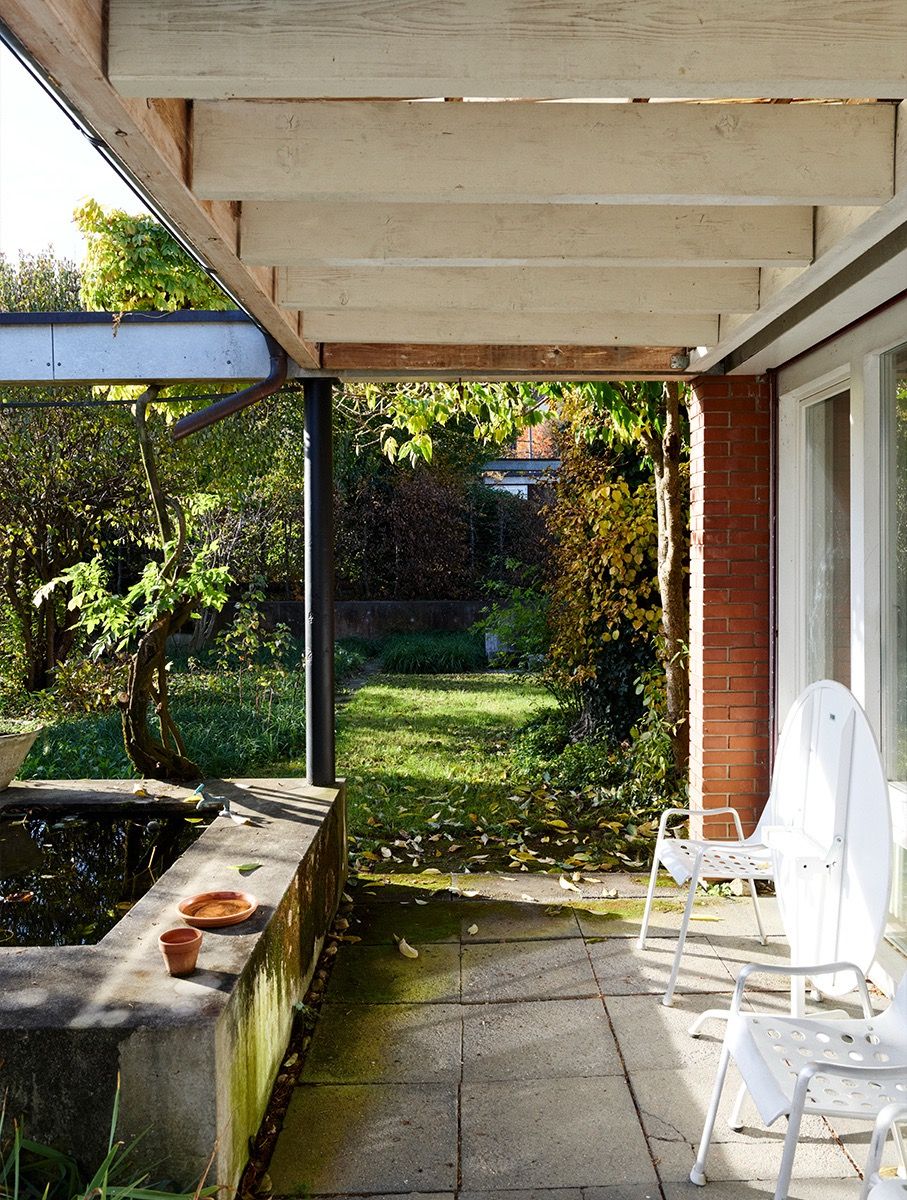
The atrium is the focus of the house: a protected, intimate outdoor area, embraced on two sides, flooded with sun. A massive rectangular concrete basin, filled with blooming water lilies in summer. Accessible from the living room, garden, garage, and the large bedroom.
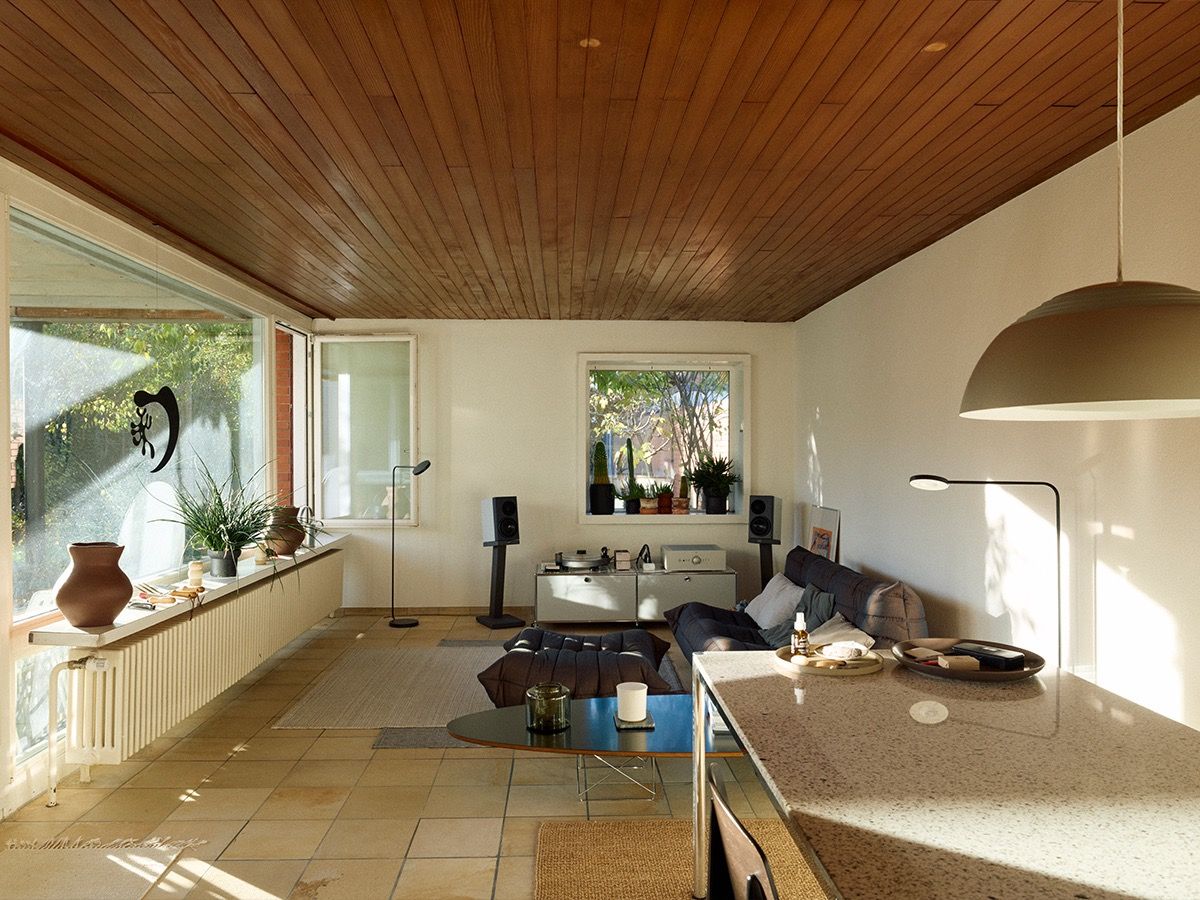
Living and dining room
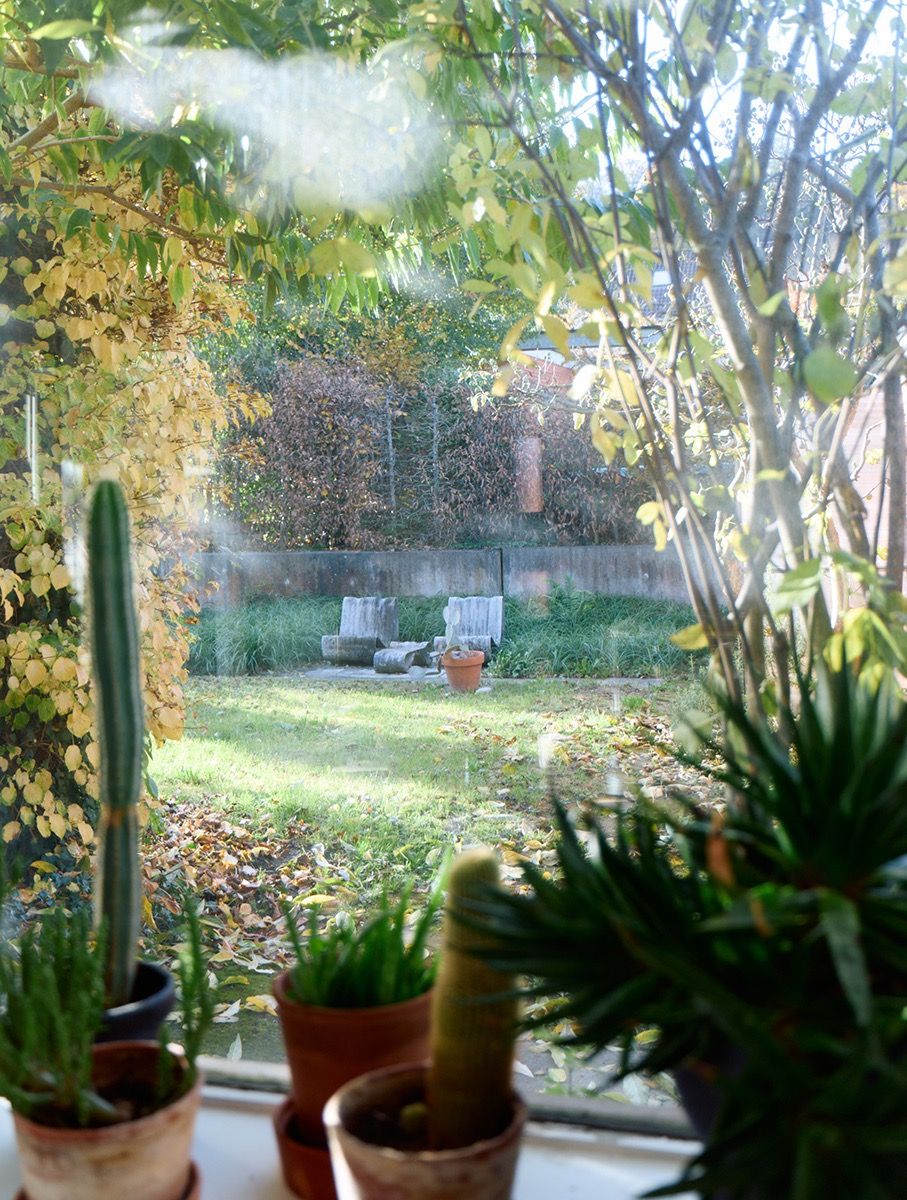
A cosy room with light and harmony. Outdoor space integrated via French doors. Floor-to-ceiling windows with beautiful wooden frames. A corner flower window opens a view into the garden.
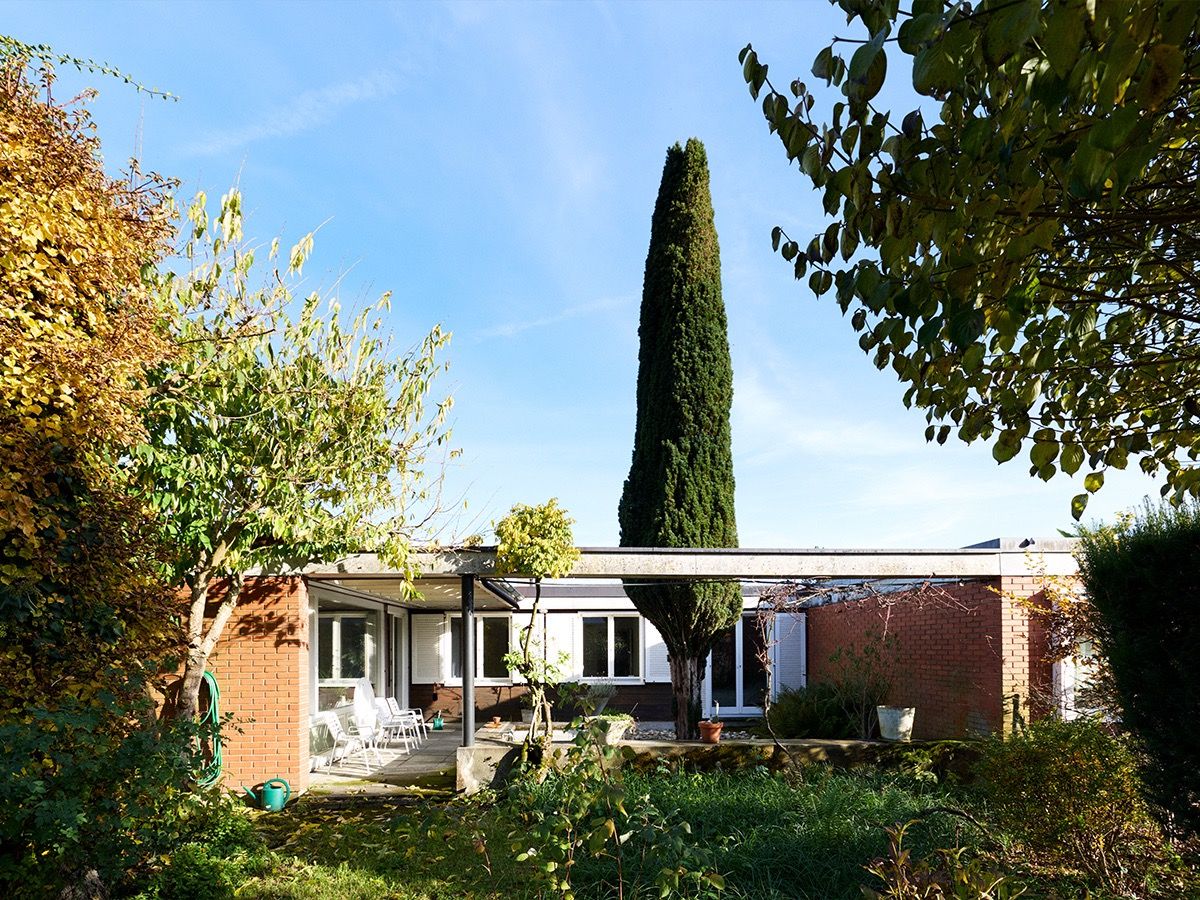
Garden
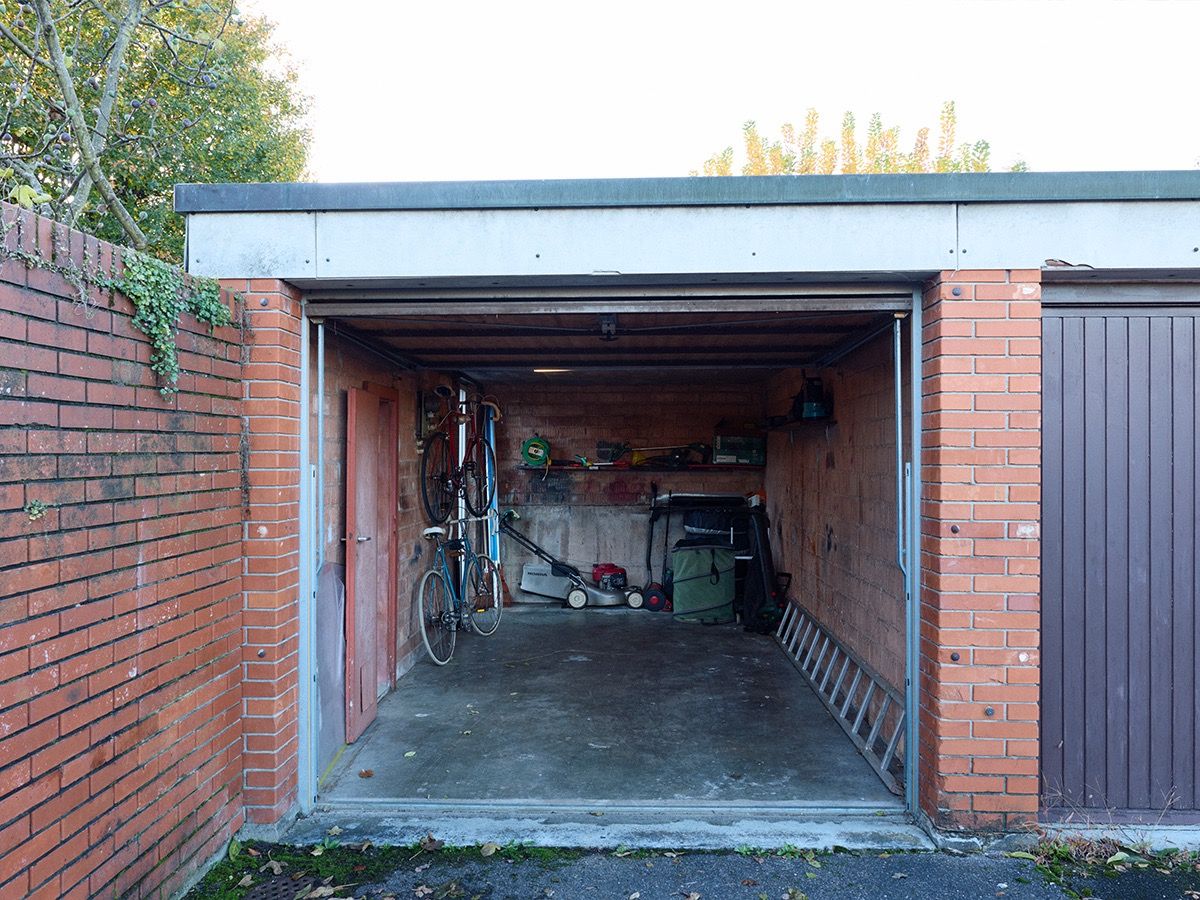
The private, secluded garden—designed by Ulrich Löw’s brother Meinrad, landscape architect—adjoins the atrium. Various bird species, hedgehogs, and newts share the space. Set into the tall brick garden wall is a door leading directly into the single garage.
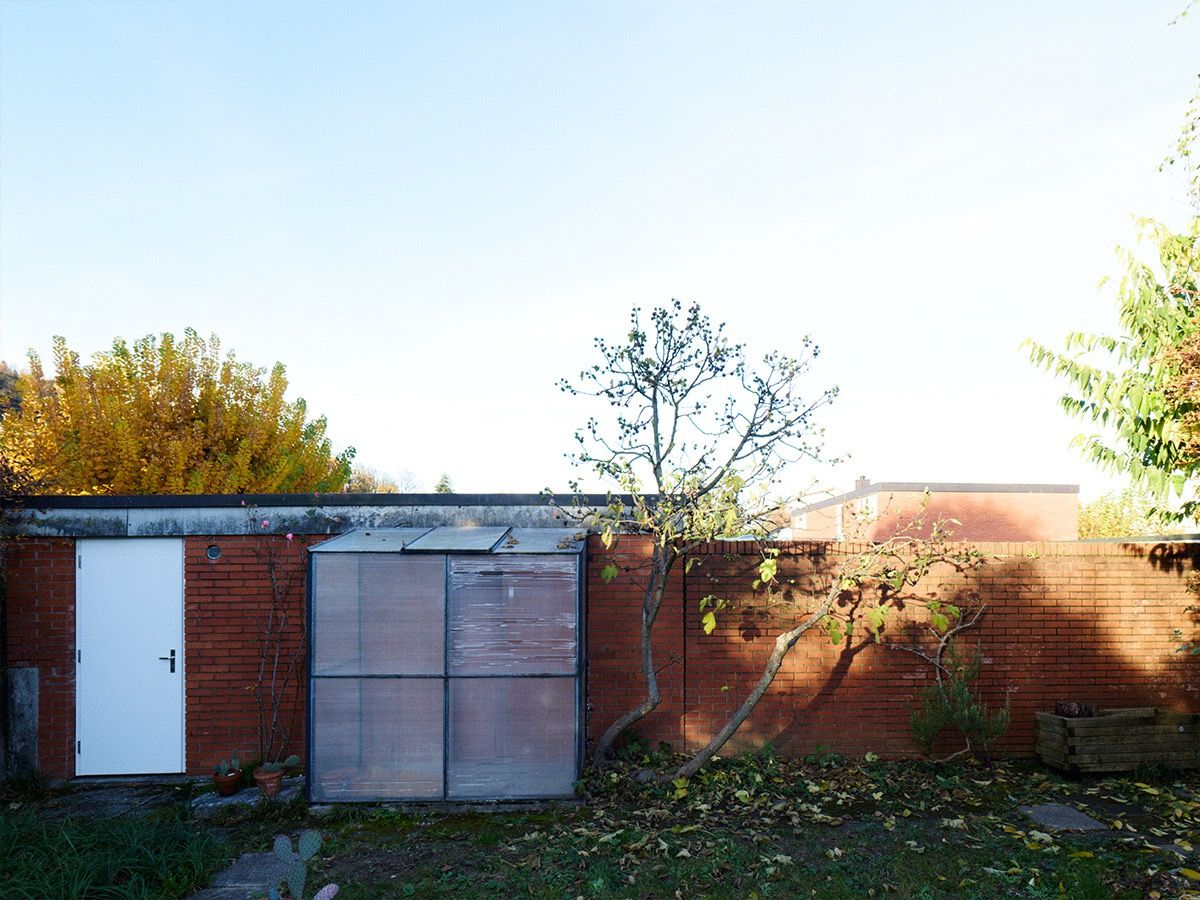
Exotic leisure
A compact orchid greenhouse was designed by Ulrich Löw for personal hours of repose. Accessible both from the garden and the garage.
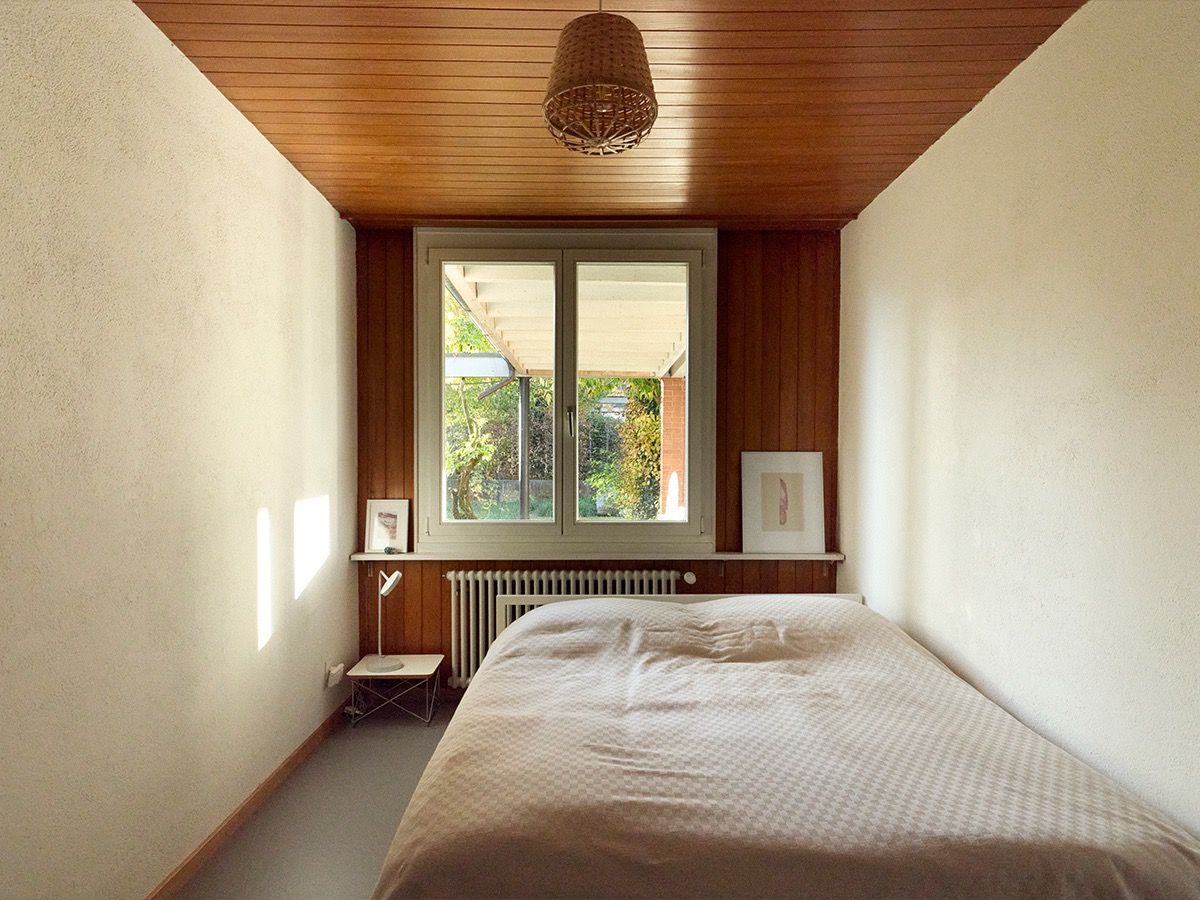
Green Views
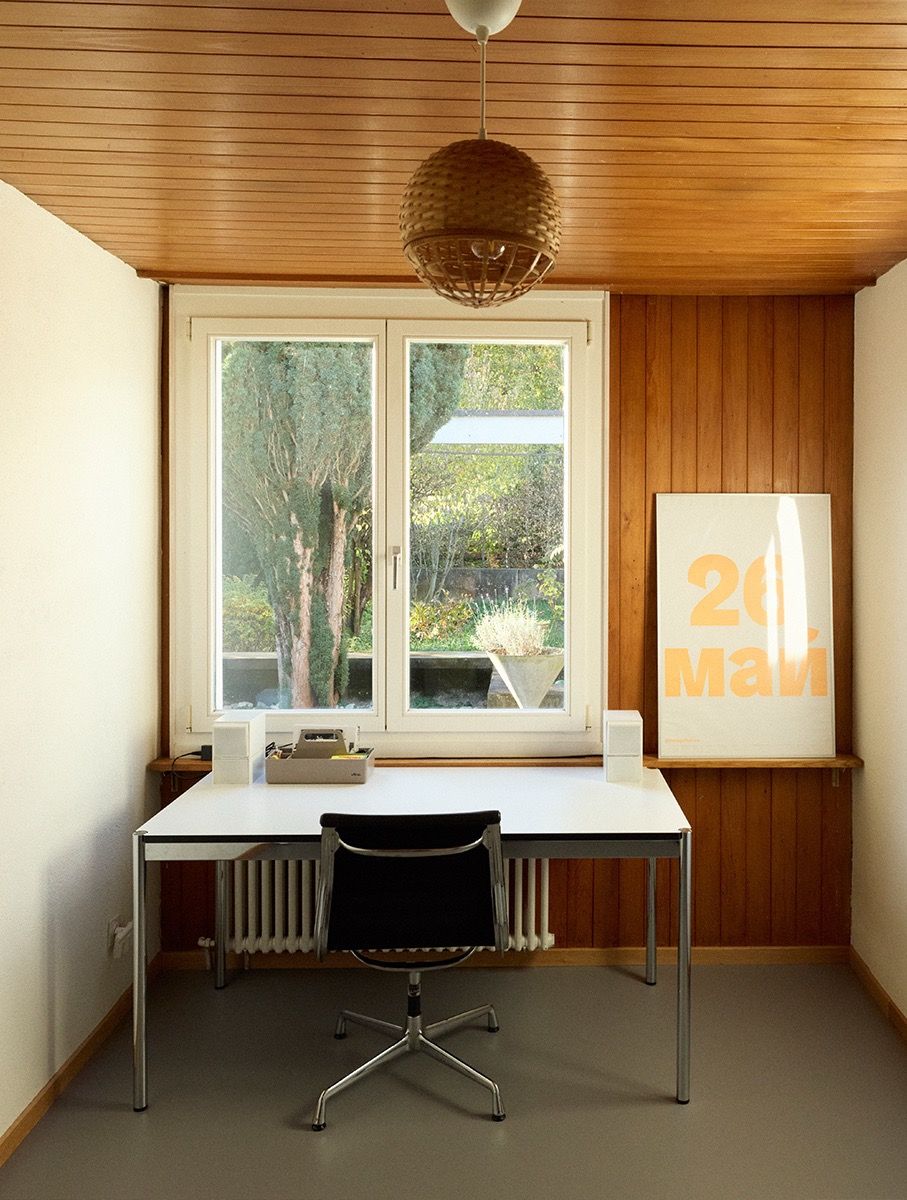
The house has three bedrooms—or two plus a study. Each room looks onto the atrium and garden.
Bathroom
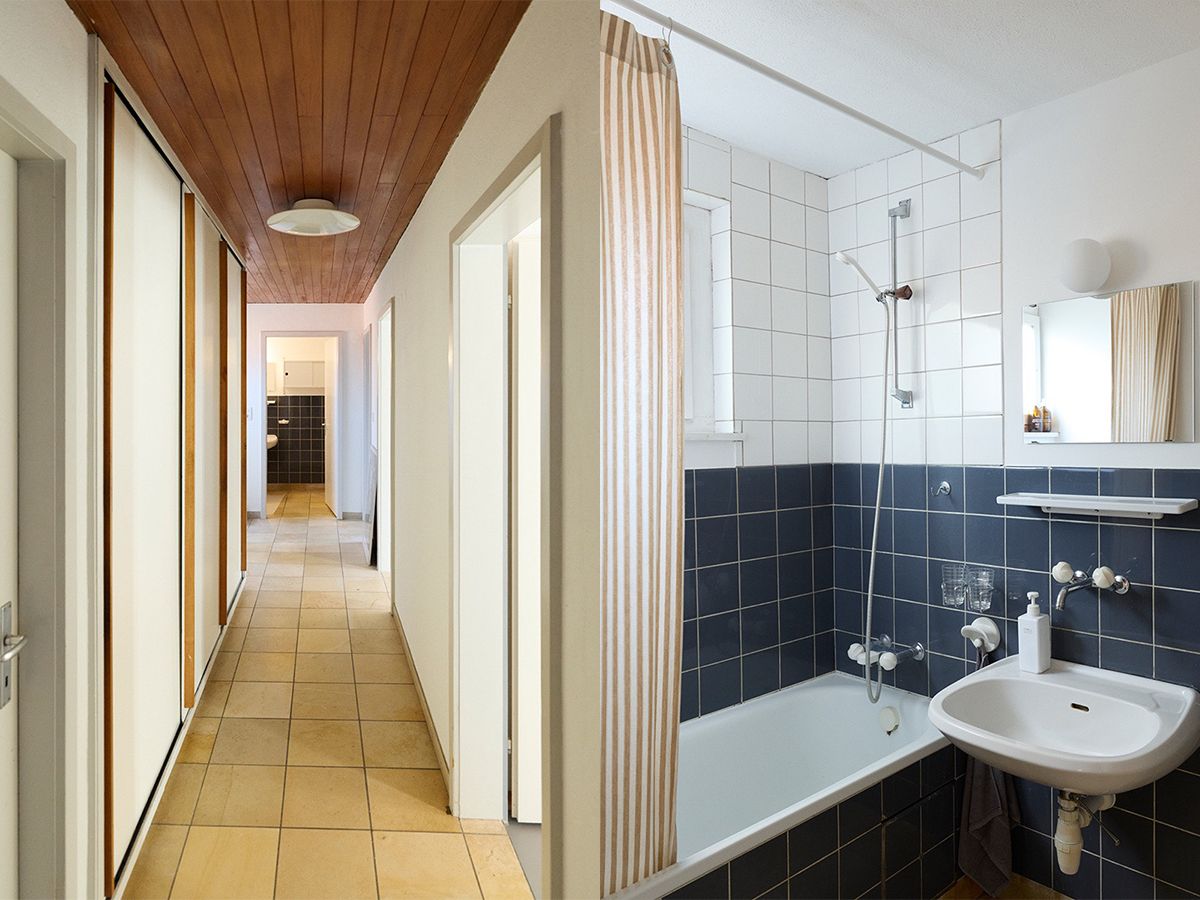
The bathroom is restored and preserved in its original state: original sink, bathtub, fittings, cabinets, hooks, and stone tiles. A guest toilet is located near the entrance.
Kitchen
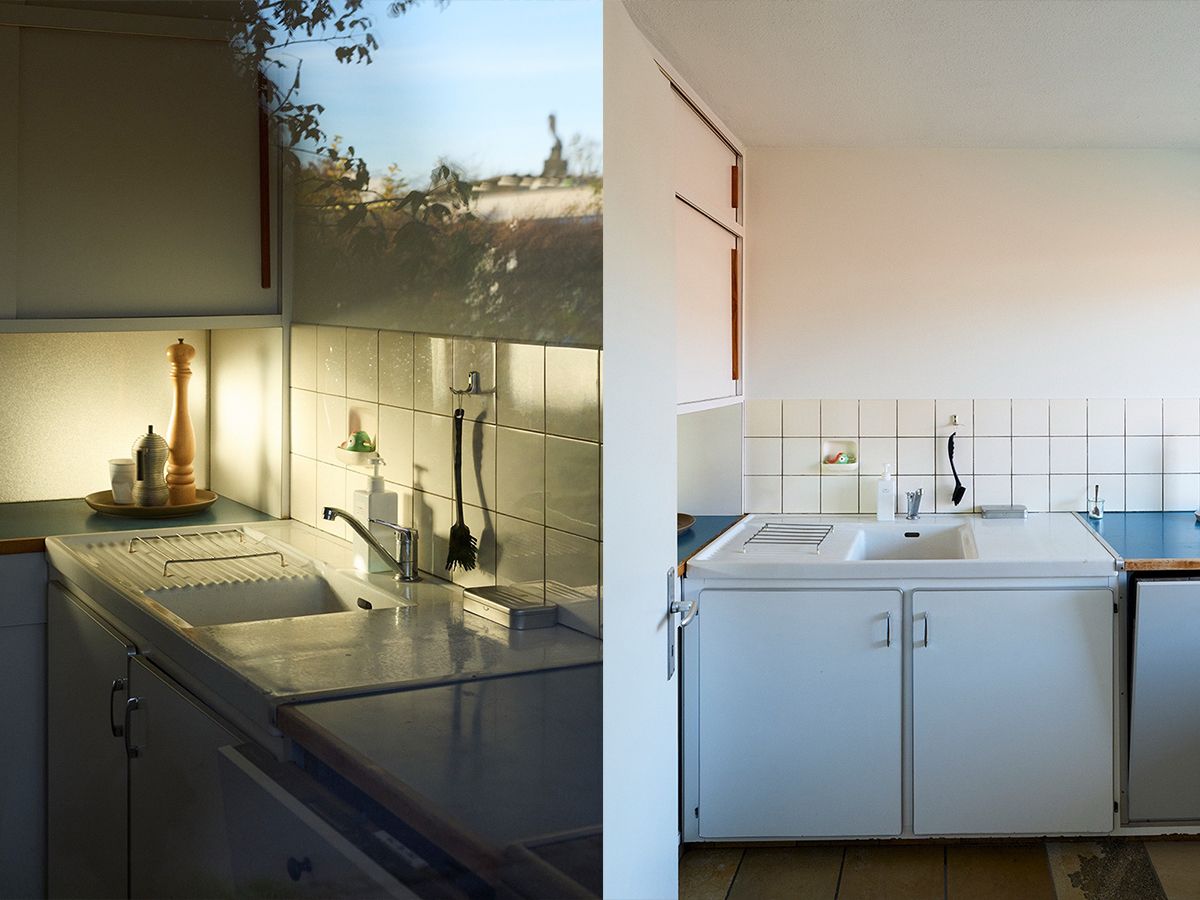
The kitchen, with pass-through to the dining area, is likewise preserved, restored, and practical. The custom cabinetry—and indeed all built-ins—are solid and well-shaped. So is the large, hand-crafted sink. Parallels to Jørn Utzon’s Kingo kitchens are unmistakable. All kitchen appliances have been replaced.
Appropriate furnishings
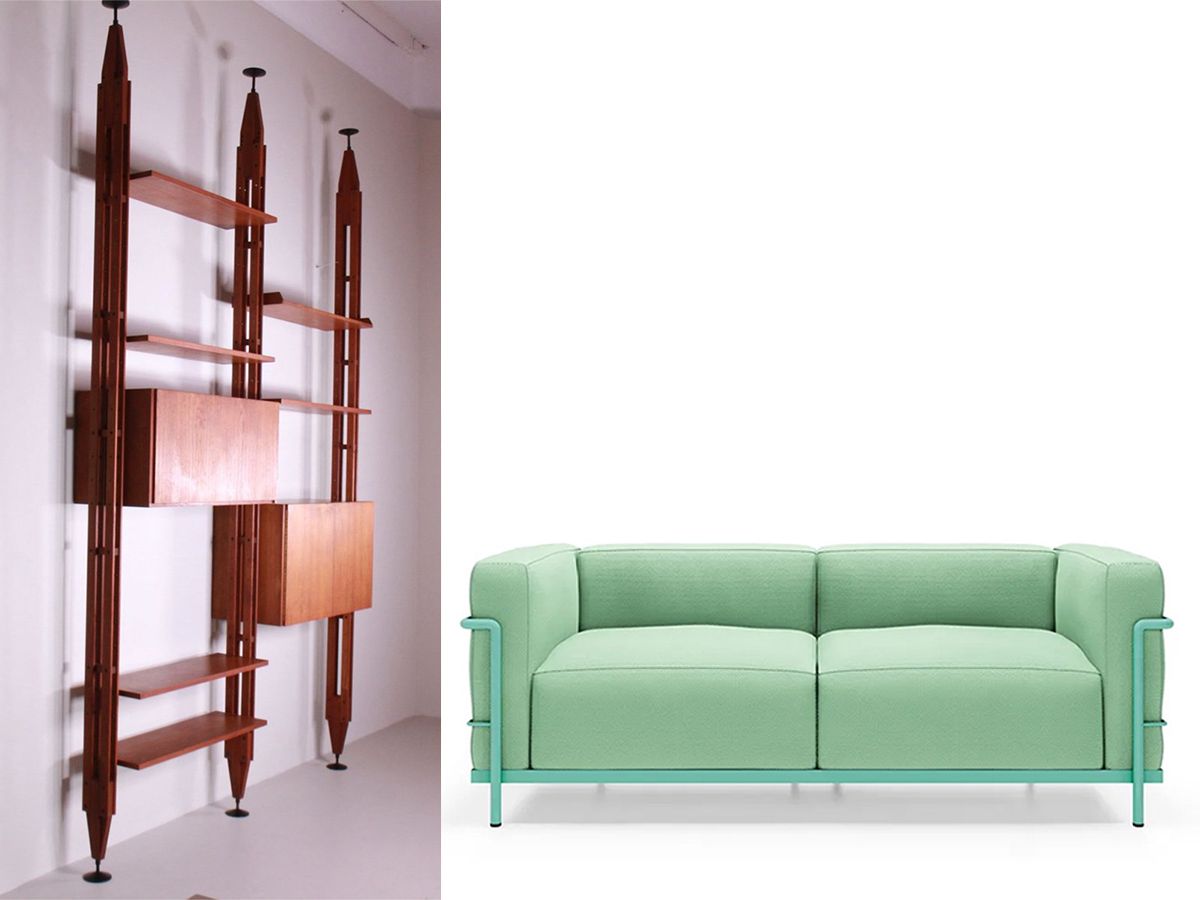
The Arne Jacobsen lamps and the Willy Guhl Loop garden armchairs still come from the Löw family household. Seating by Charlotte Perriand and Le Corbusier, and the two LB7 bookcases by Franco Albini, are no longer in the home. The modernist functionality and spatial economy of these objects still suit the architecture and its spirit. The floor-to-ceiling LB7 units remain available on the vintage market and introduce an Italian design spirit into the mix.
Location
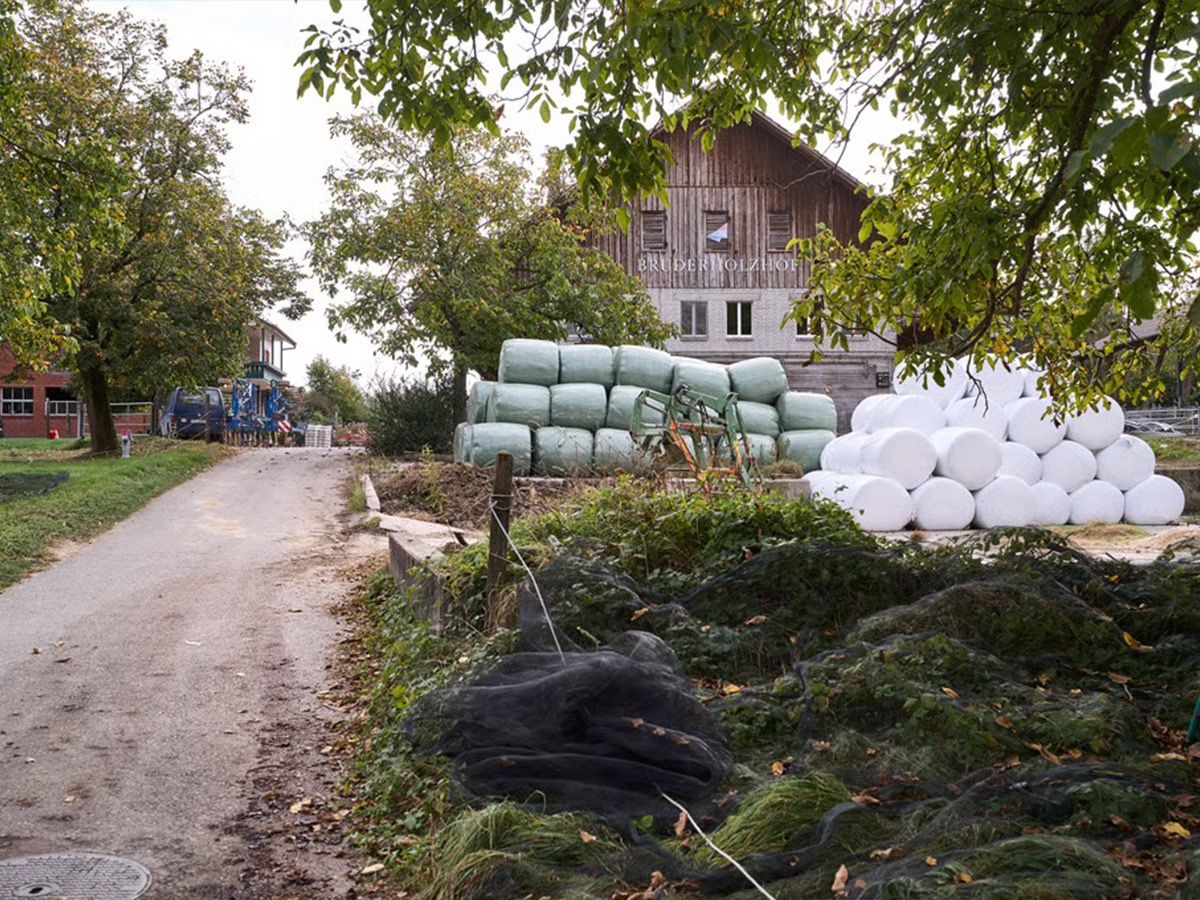
With tram 11, Basel city center is reached in 15–20 minutes. The short walk offers even more architectural entertainment: Ernst Gisel’s brutalist church from the same year of construction (1960). Its hourly chime accompanies life in the Löw House. The vibrant Dreispitz district, a hub of residential, educational, and commercial activity, lies just 10 minutes away. The Reinach Campus of the International School (grades 9–12) is a 15-minute walk. Prefer shopping close to nature? The nearby 40-hectare Bruderholzhof, a pioneering organic farm currently transitioning to biodynamic agriculture and offering high-quality products, is within easy reach. For leisurely strolls, the Seiglermatten nature reserve provides an idyllic setting.
Construction
Löw & Manz developed the LOMA system for the estate, enabling the shell to be built with few industrially prefabricated components. Foundation, cellar walls, and ceiling above the basement are concrete or reinforced concrete elements. The flat-roof house performs well thermally. Above ground, exterior walls are exposed brick; interior walls are insulating brick. Stone wool panels provide insulation in the wall sandwich. The resulting K-value (annual heating energy per m²) of 0.5 was very good for its time.
Heating
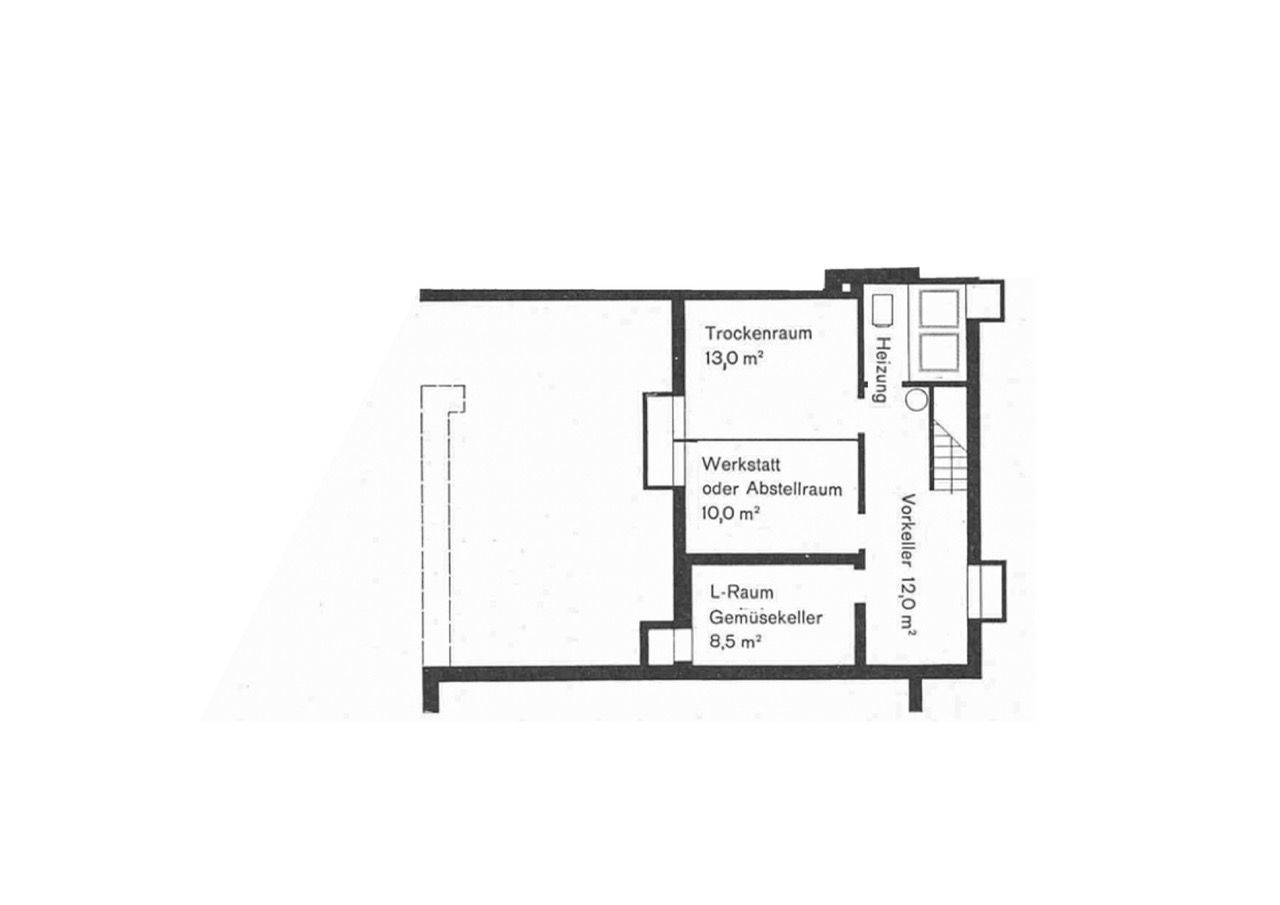
The overhauled central oil heating runs efficiently. Heat distribution via original cast-iron radiators. Sustainability prepared: permission for conversion to a heat pump has been granted by the heritage authorities; detailed plans are available.
Indoor climate
Insulation and thermal mass protect residents remarkably well from heat, while ensuring cosy warmth in the colder months.
LOADING ..
Sell to Poeticwalls
We buy conversion properties and building land at market prices. A showcase development is guaranteed.


