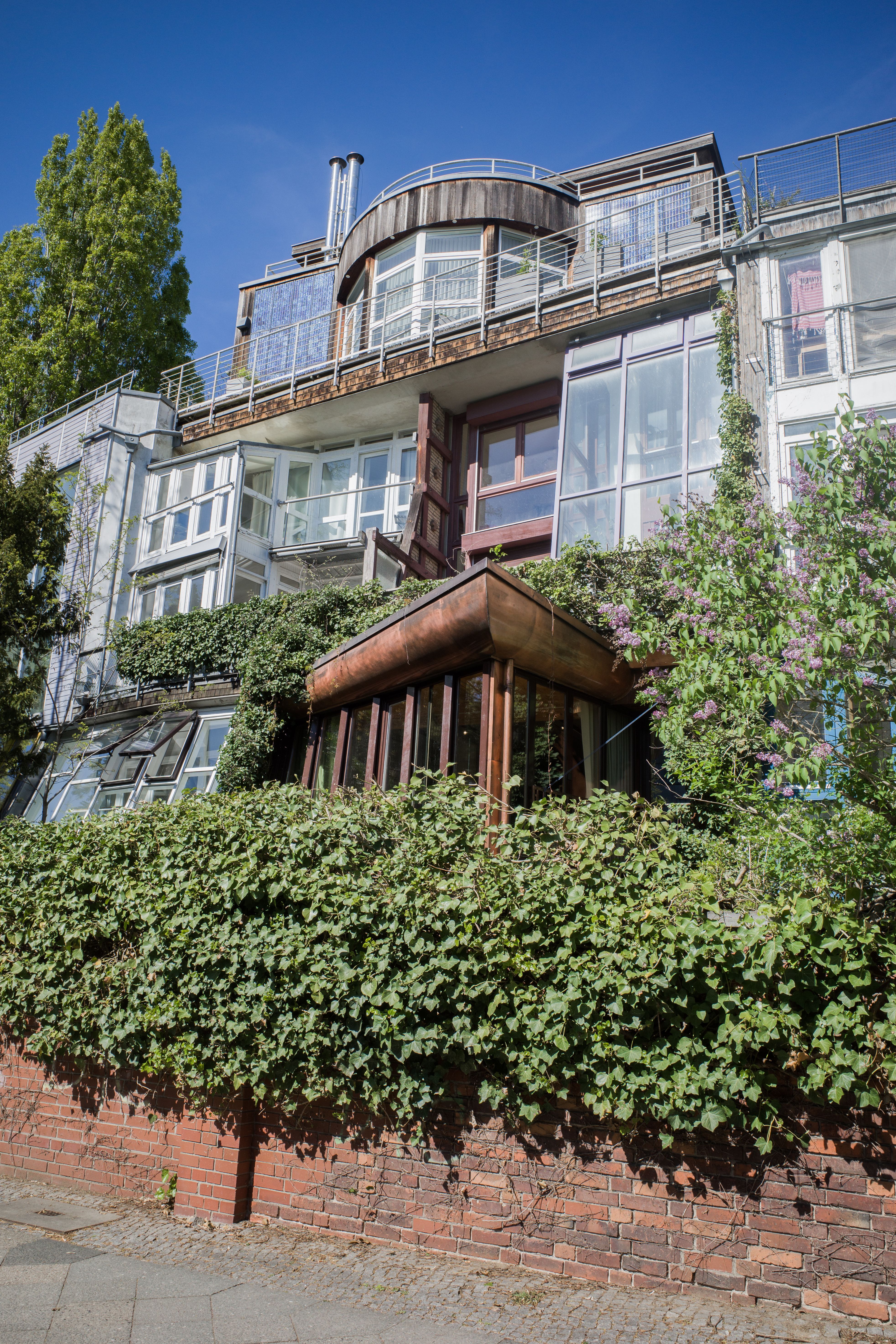
The most utopian way to live in Berlin is in the Ökohaus. It’s also one of the best locations.
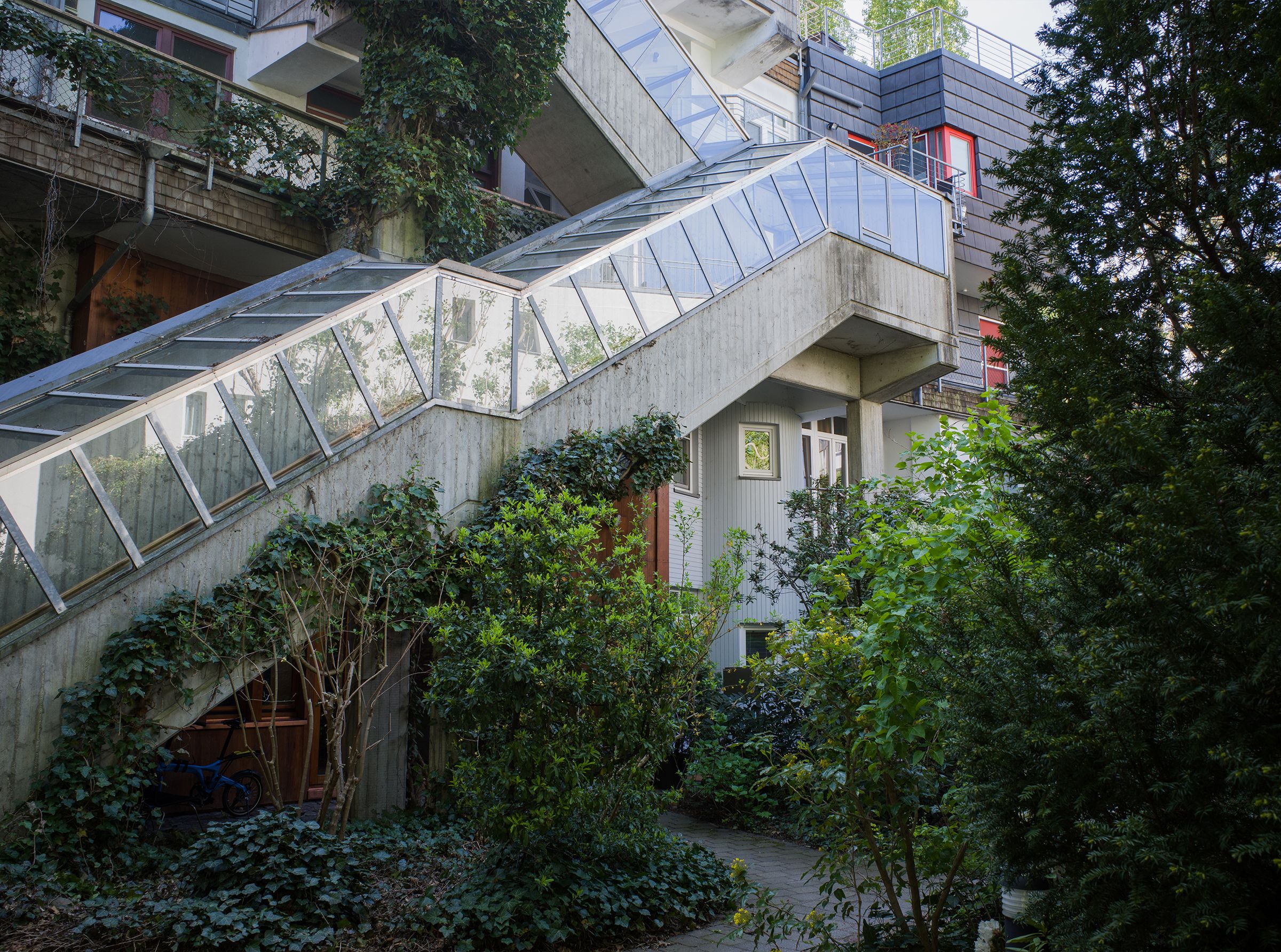
As a future laboratory, the structural and social radicalism of Frei Otto's Ökohaus cannot be overstated. This 80s masterstroke is currently inspiring a new generation of free-thinking architects to reinvent housing and to reclaim free space — Lacaton & Vassal among them. The aura of Utopia is enormous as you approach the concrete load-bearing structures, which stand like a herd of elephants in the overgrown park in the Embassy Quarter. The eco-house oozes humanism. Intimations of a freer life, of engaged and intact connections to nature and to the world — am I just imagining the campfire smell? With Unit 3 now for sale — a maisonette — you get two future master builders at once: Frei Otto, originator of the settlement — among other things designer of the biomorphic tent roofs of the Munich Olympic Park 1972, with their lightweight membrane and cable-net constructions. Plus Arno Brandlhuber, today Germany's most influential and most compelling architect, who together with unprofessional.studio designed and realised the interior anew. Poeticwalls is pleased to show you the property and to brief you with full expertise.
Request Documentation
Details
Status
Sold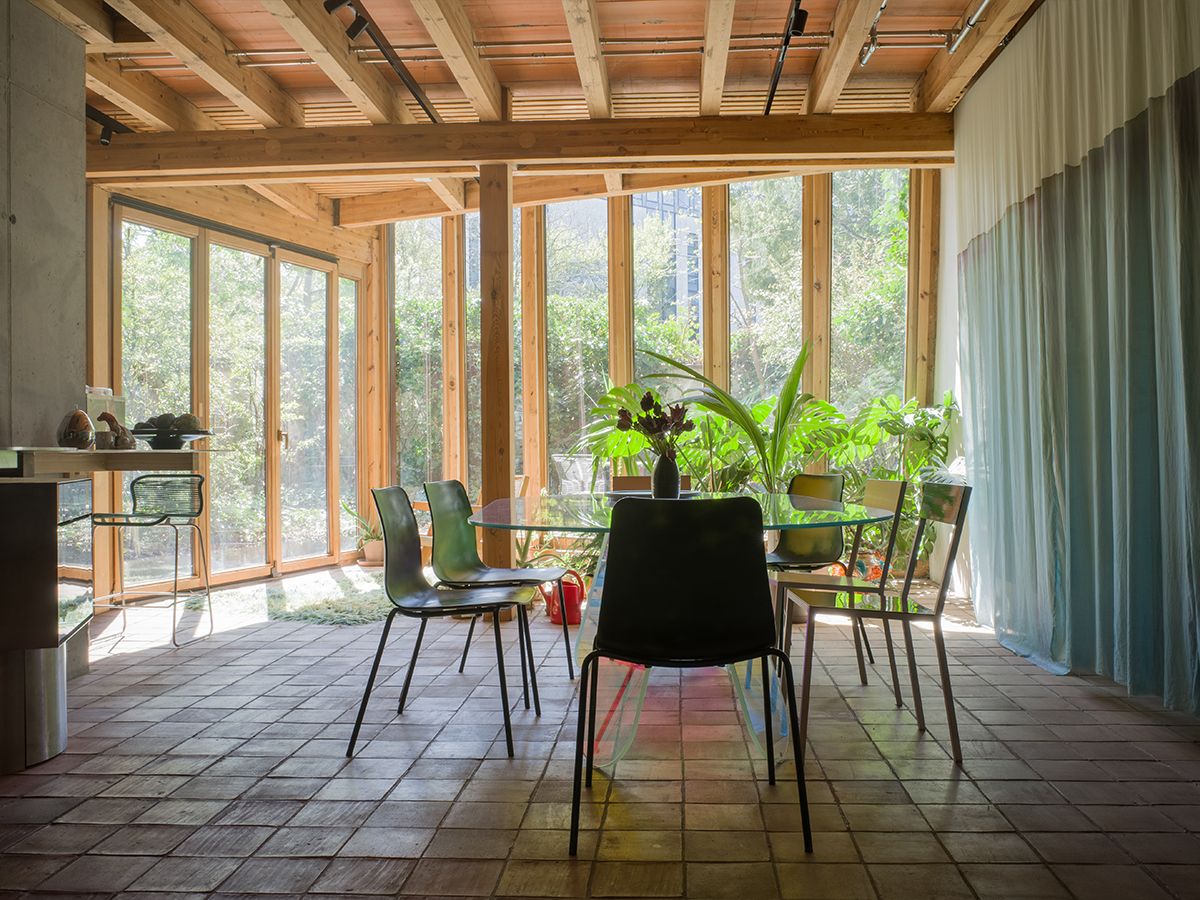
Private home on the platform — Frei Otto's manifesto by the Tiergarten, in a second translation by b+ and unprofessional.studio.
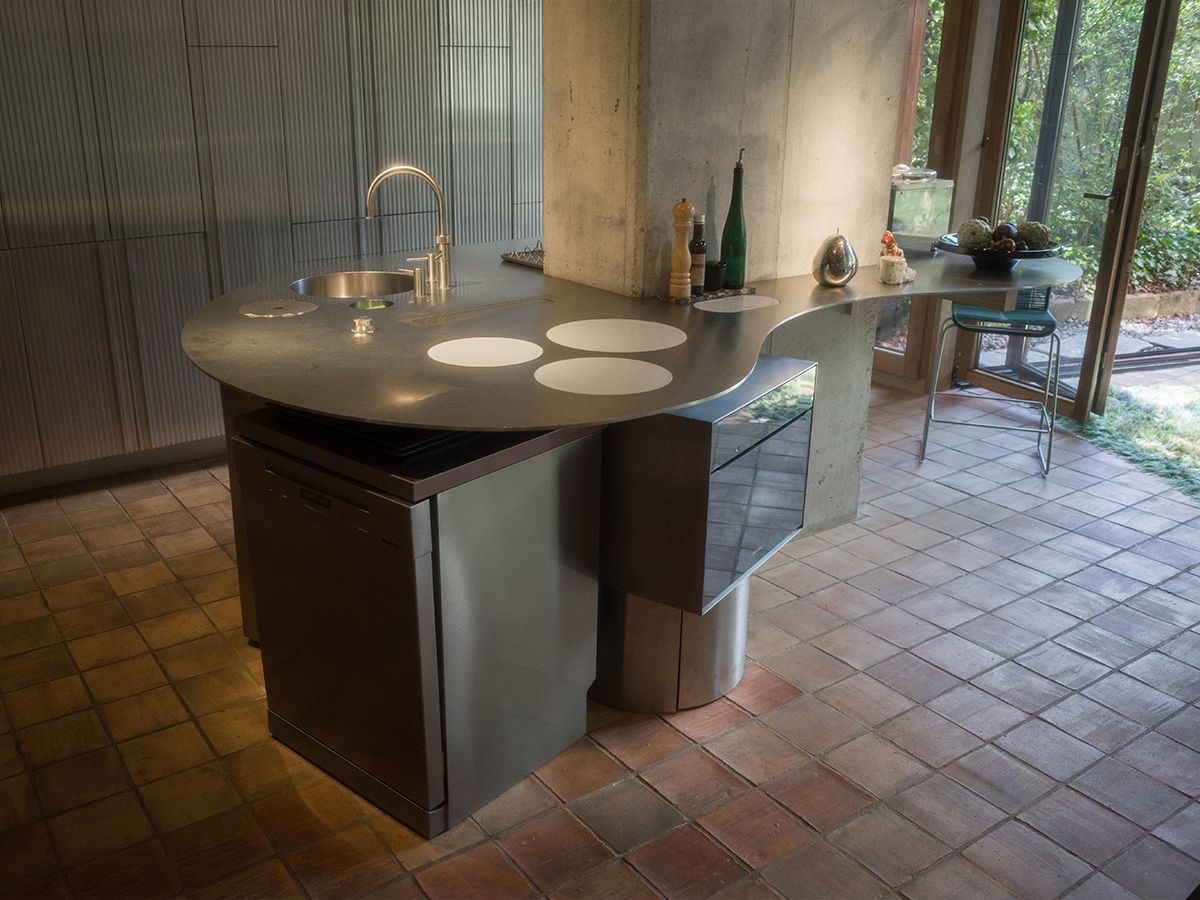
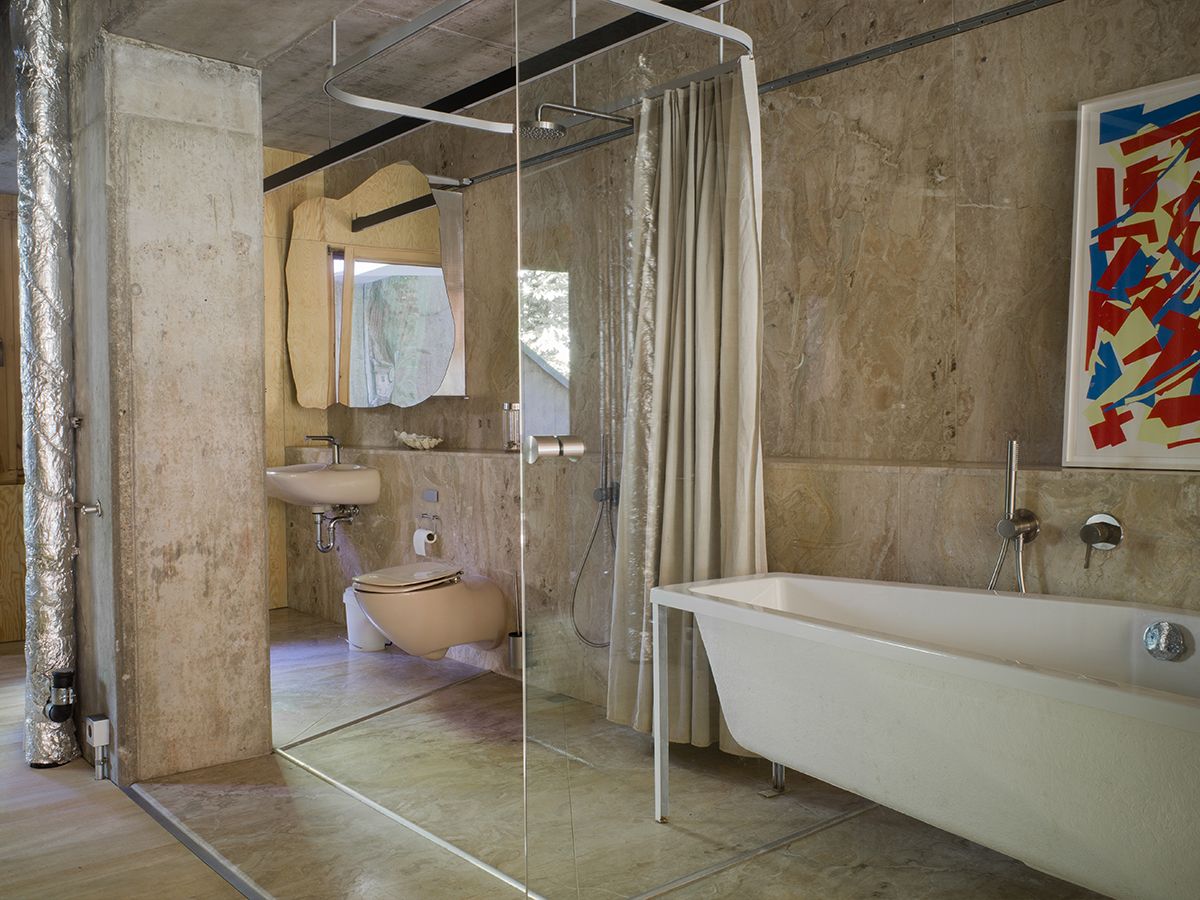
A maisonette by Frei Otto at Tiergarten. 190 m². Clay walls following the historic recipe, central mirror wall on the upper floor, marble in the bathrooms, island kitchen by Sam Chermayeff. Dual authorship Frei Otto / Brandlhuber+. Four steps to the Tiergarten, ten minutes to the Kulturforum, fifteen to the Museum Island.
«The ideal adaptable house cannot be built in the old sense, nor can it be planned in the old sense. It comes into being synchronously with its tasks and changes with them. It is always new, it does not age, but it passes when its tasks should fade.» Frei Otto, 1984
The Ökohaus was built in 1984–87 for the IBA Berlin on a 3,940 m² plot between Cornelius- and Rauchstrasse. Three reinforced-concrete tables, eighteen residential units, one shared garden. The apartments inside them are private — freely planned, freely built, freely alterable. Otto called this Eigenheim auf der Etage — the private home on the platform.
The IBA '87 neighbours next door — the urban villas on Rauchstrasse, urbanistically framed by Rob Krier, with buildings by Aldo Rossi, Hans Hollein, Giorgio Grassi, Brenner & Tonon, Nielebock, Valentiny & Hermann — are listed under heritage protection. For the Ökohäuser, the application has been filed.
Frei Otto and the Ökohaus
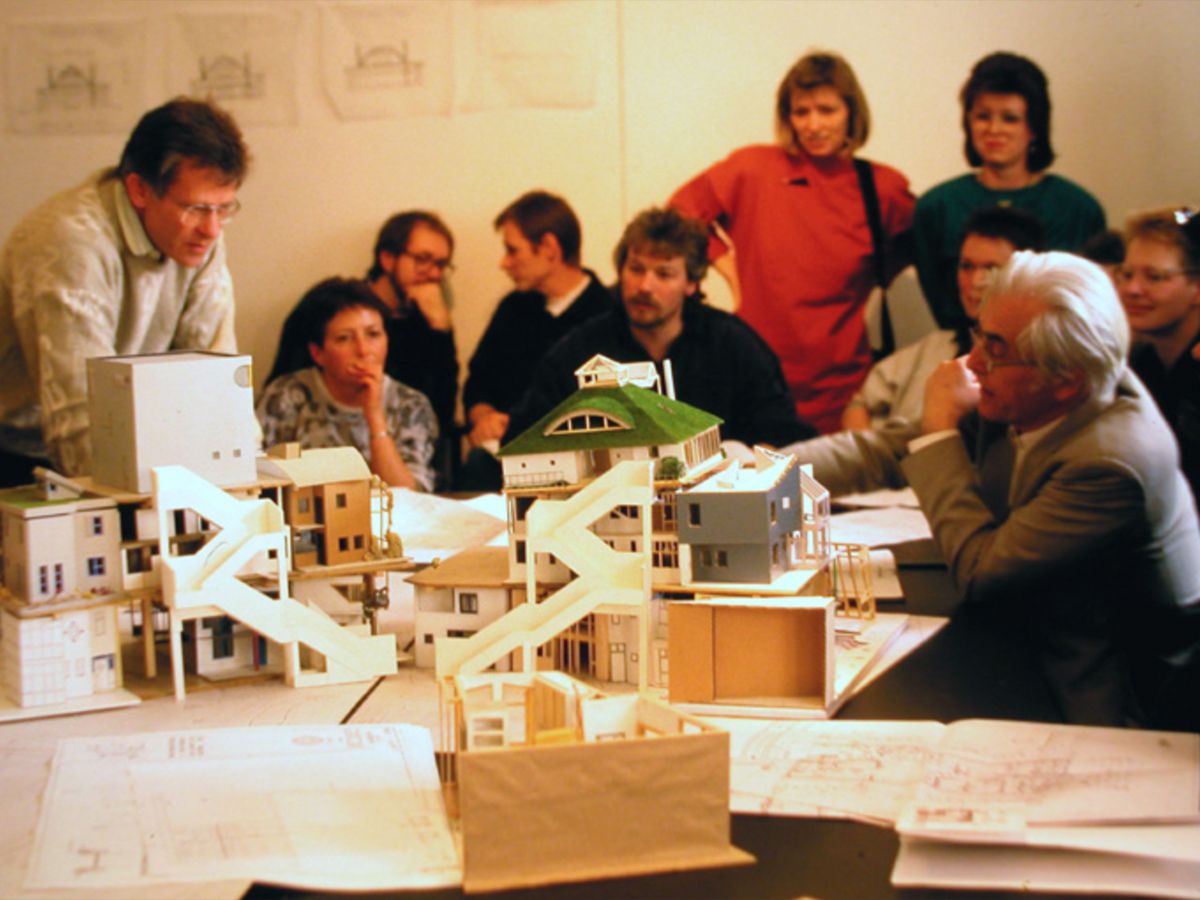
Frei Paul Otto (1925–2015) had the idea of adaptable building already as a student. In 1958 he published it in Berlin-Zehlendorf, in Mitteilung Nr. 6 of his Development Centre for Lightweight Construction: a reinforced-concrete skeleton into which the inhabitants would set their own dwelling units. In 1959 a design followed for a flexible high-rise in New York, with the same logic. The Berlin Ökohäuser are the only built realisation of this concept — and Frei Otto's only residential building in Berlin altogether.
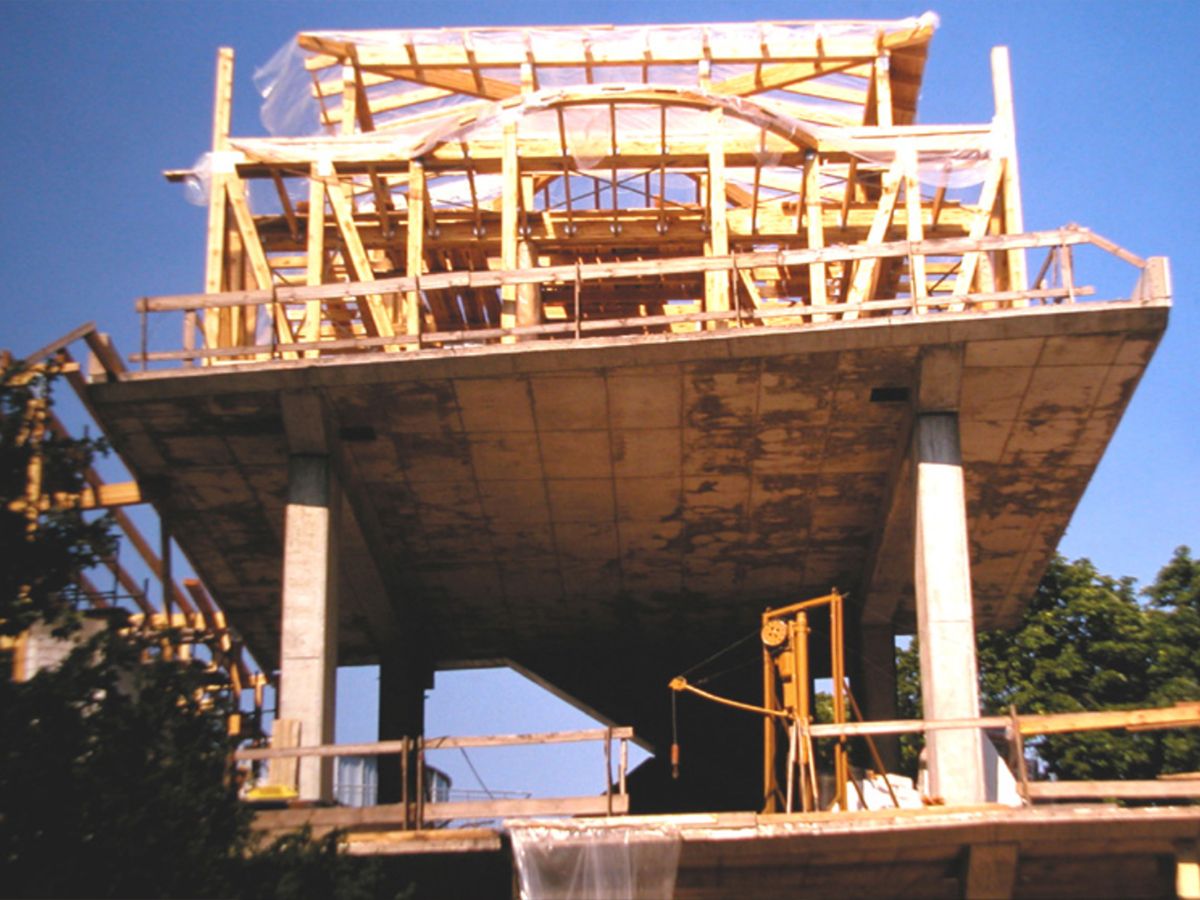
Otto was invited in 1984 by Josef Paul Kleihues, director of the International Building Exhibition, on the theme "Nature and Building". The prominent plot at Askanischer Platz had originally been allocated. After a last-minute change in Oswald Mathias Ungers' urban-planning concept, Otto switched to the smaller, more intimate plot of the former Vatican embassy at the Tiergarten. In barely a year, his team developed a "three-dimensional garden city" — three reinforced-concrete tables as collective infrastructure, private homes on the platforms as private space.
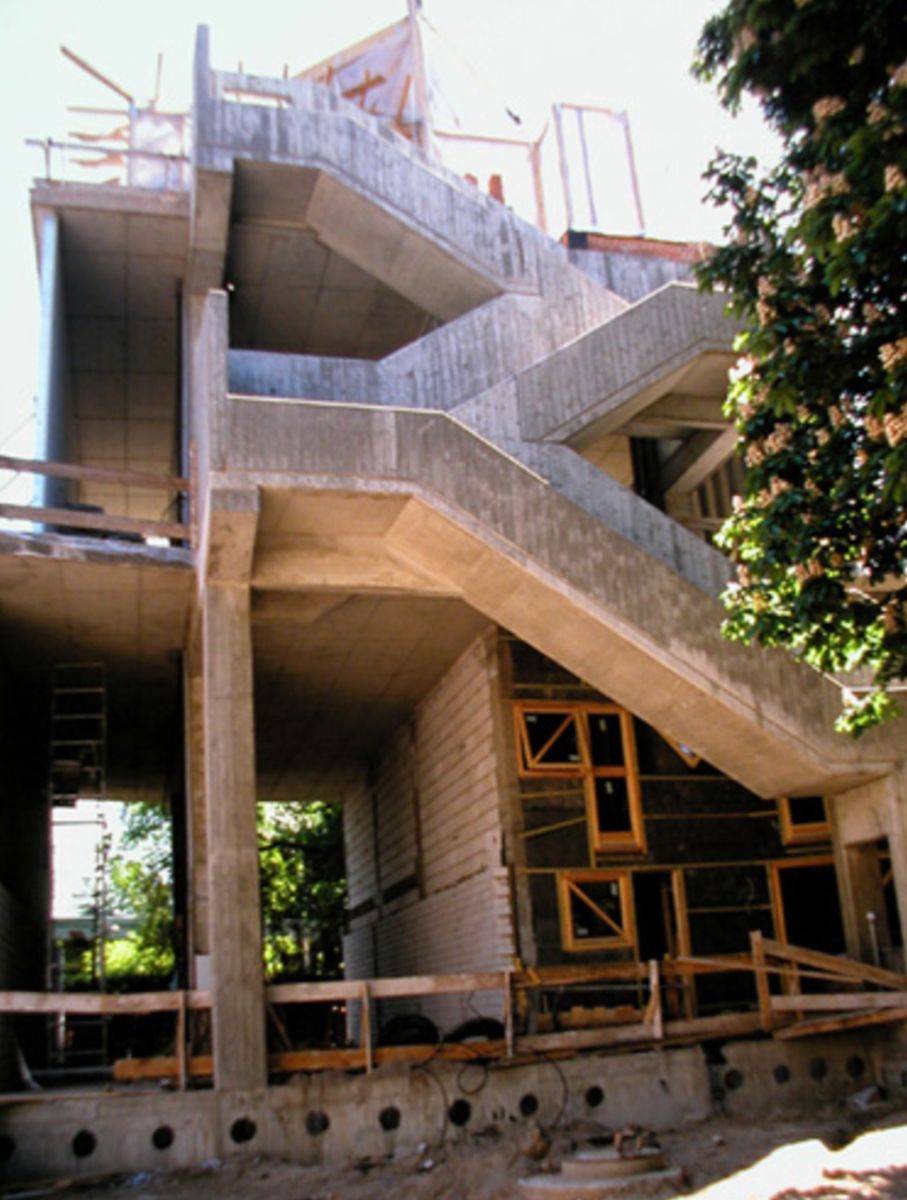
The Structure
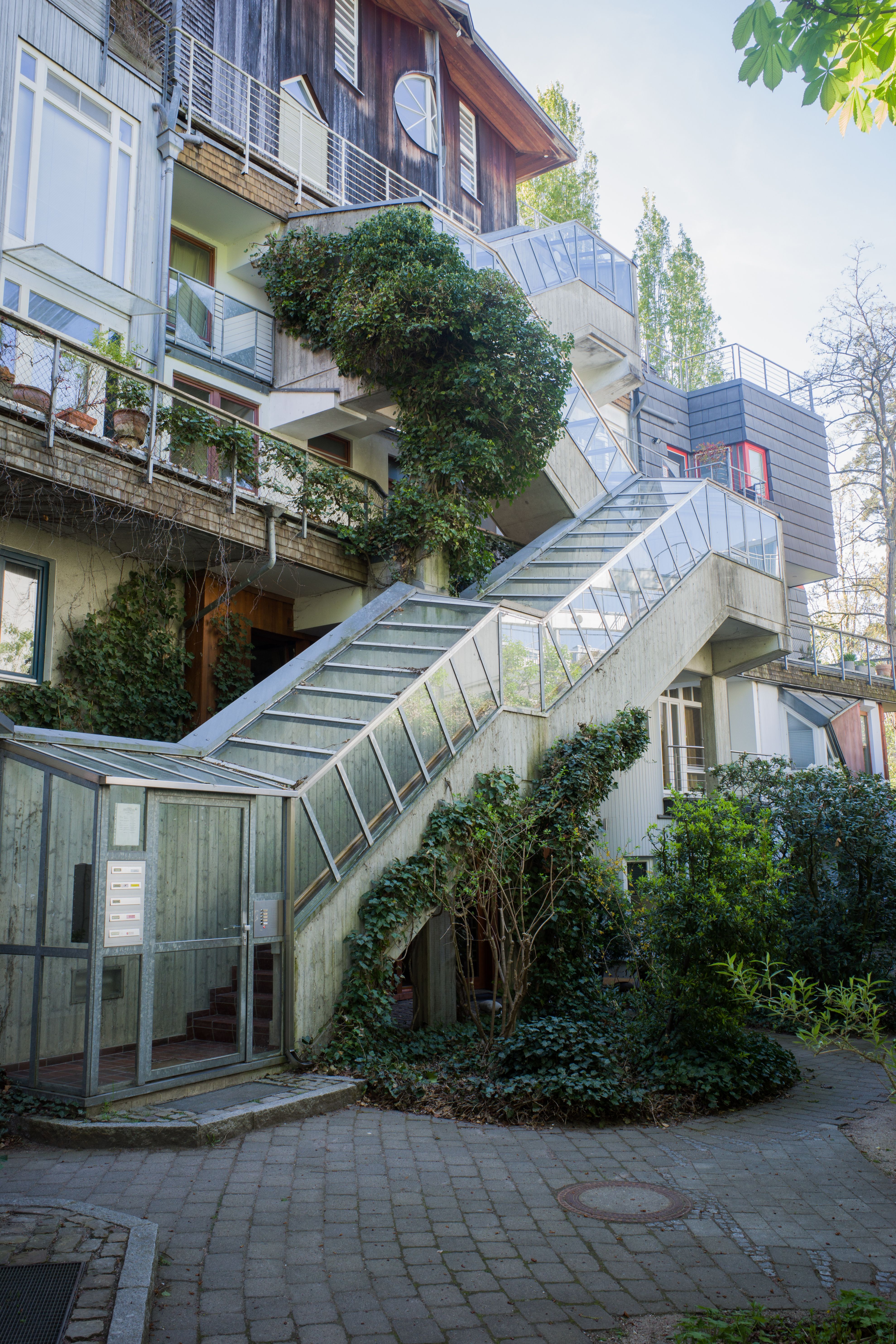
Three tables. Columns 50 × 110 cm. Reinforced-concrete slabs 25 cm. Downstand beams 45 cm. Clear height per storey 7.5 m. Maximum building height 13.5 m. Otto positioned the skeletons in a way that no sightline and no significant existing planting was lost — 26 large trees remained, the path of the sun studied across the seasons. External staircases serve the platforms and brace the skeletons.
The separation of structure and dwelling unit is not just a form, but a legal-economic construct. Otto wanted to prevent land speculation from devouring the project: plot and tables are held collectively, in Erbbaurecht (heritable building lease). Only what is built within the tables is changeable and transferable. Form and tenure are coupled.
Within the tables, eighteen applicants planned their own homes with their own architects. Otto stayed out of the designs, "to enable diversification". The result is a built patchwork — Otto's thesis Form as Result in full consequence.
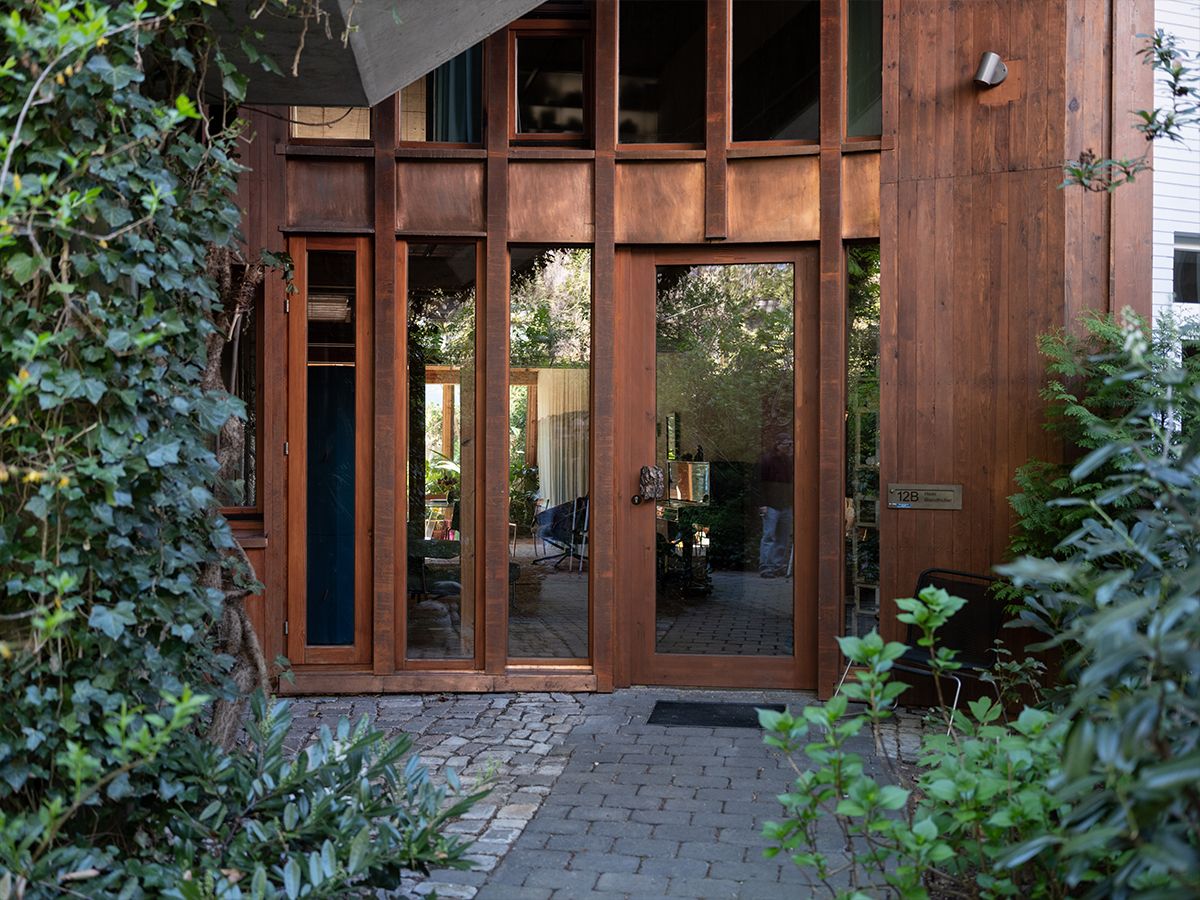
Unit 3
Unit 3 sits in the south-west table, on the ground level, with an external staircase set in front to the north. External dimensions 6.80 × 16.00 m. Clear height 5.30 m. Two storeys as a maisonette. Living area per WoFlV: 190 m².
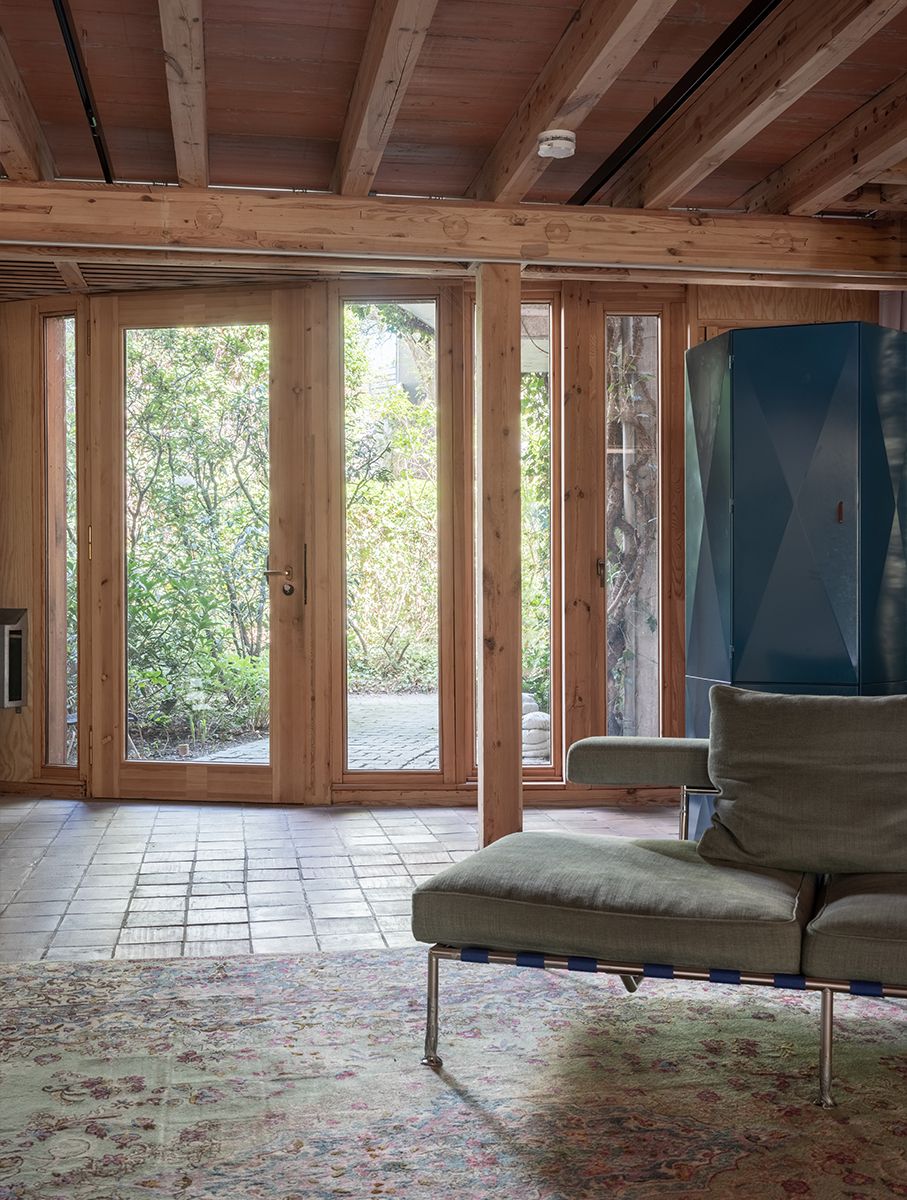
The original 1987 build placed within Frei Otto's concrete infrastructure a two-storey timber skeleton, masonry of dried clay bricks, hollow clay floor tiles (Hourdis) as floor slabs, and a cross-flow heat exchanger. The clay walls have a final layer of white kaolin clay (unpainted), the clay plaster still following the 1987 mix.
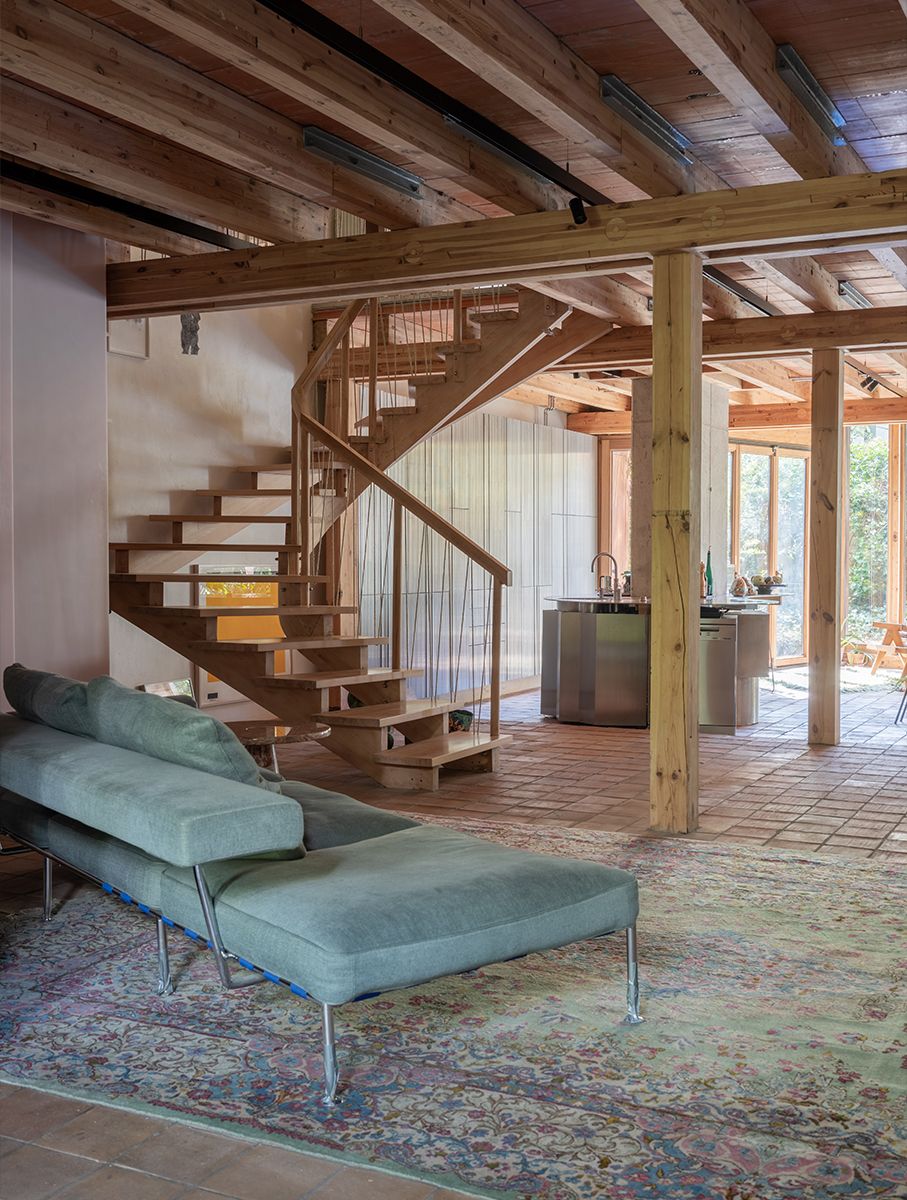
Ground floor
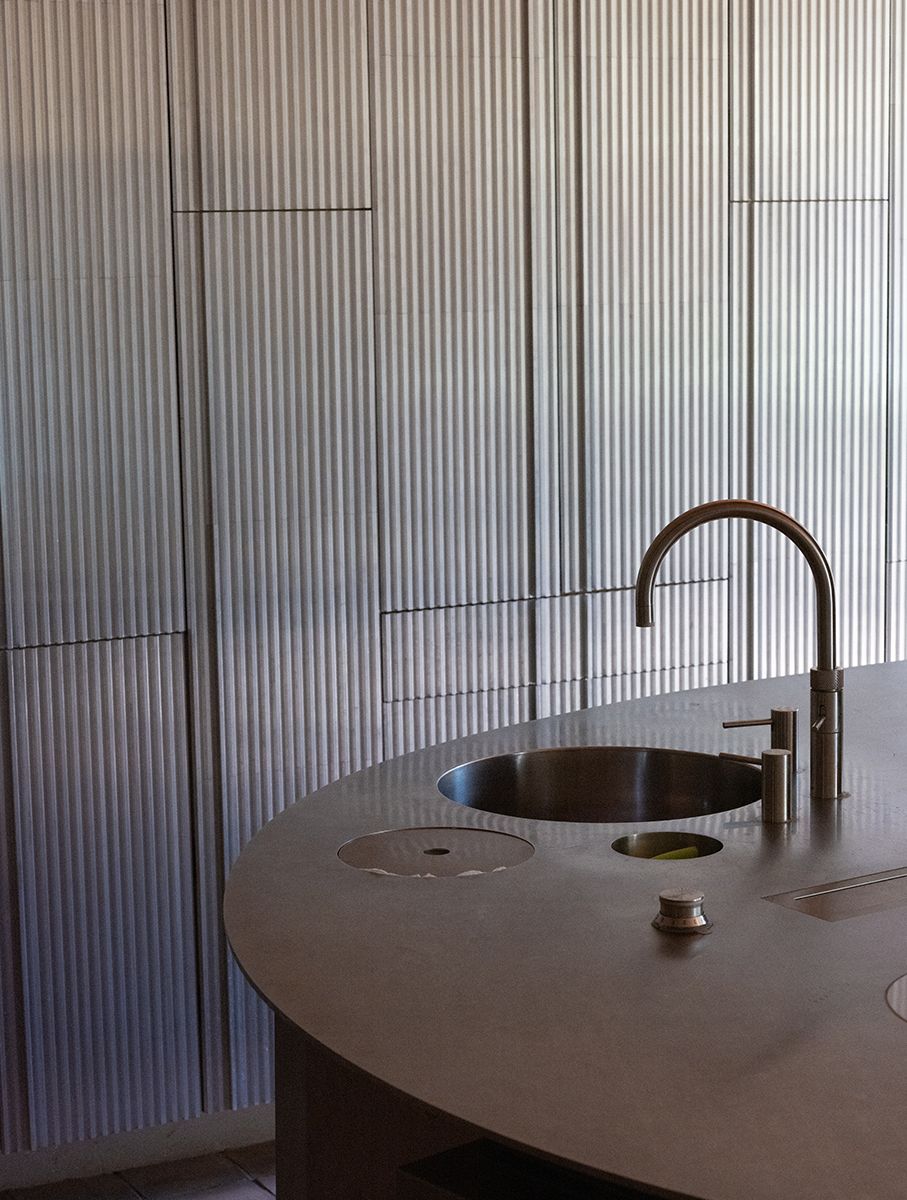
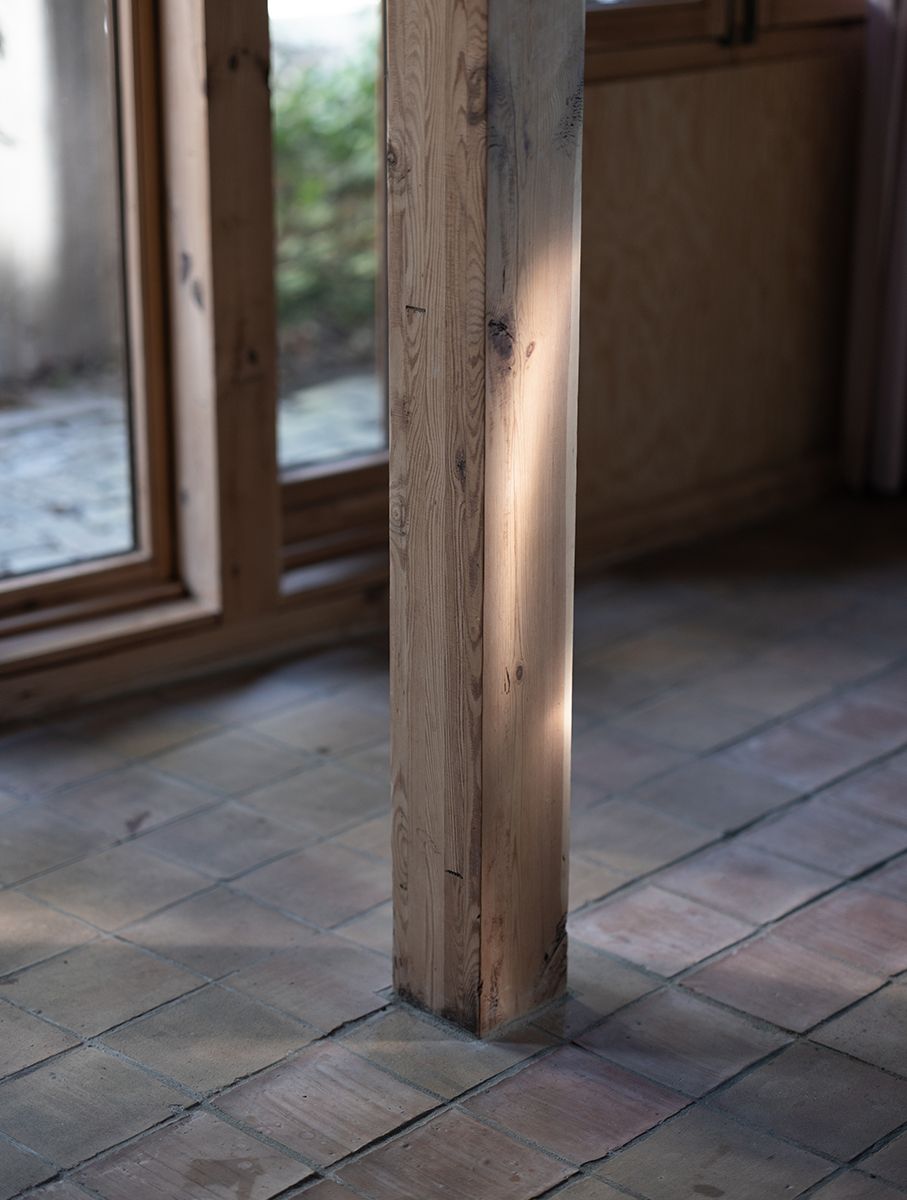
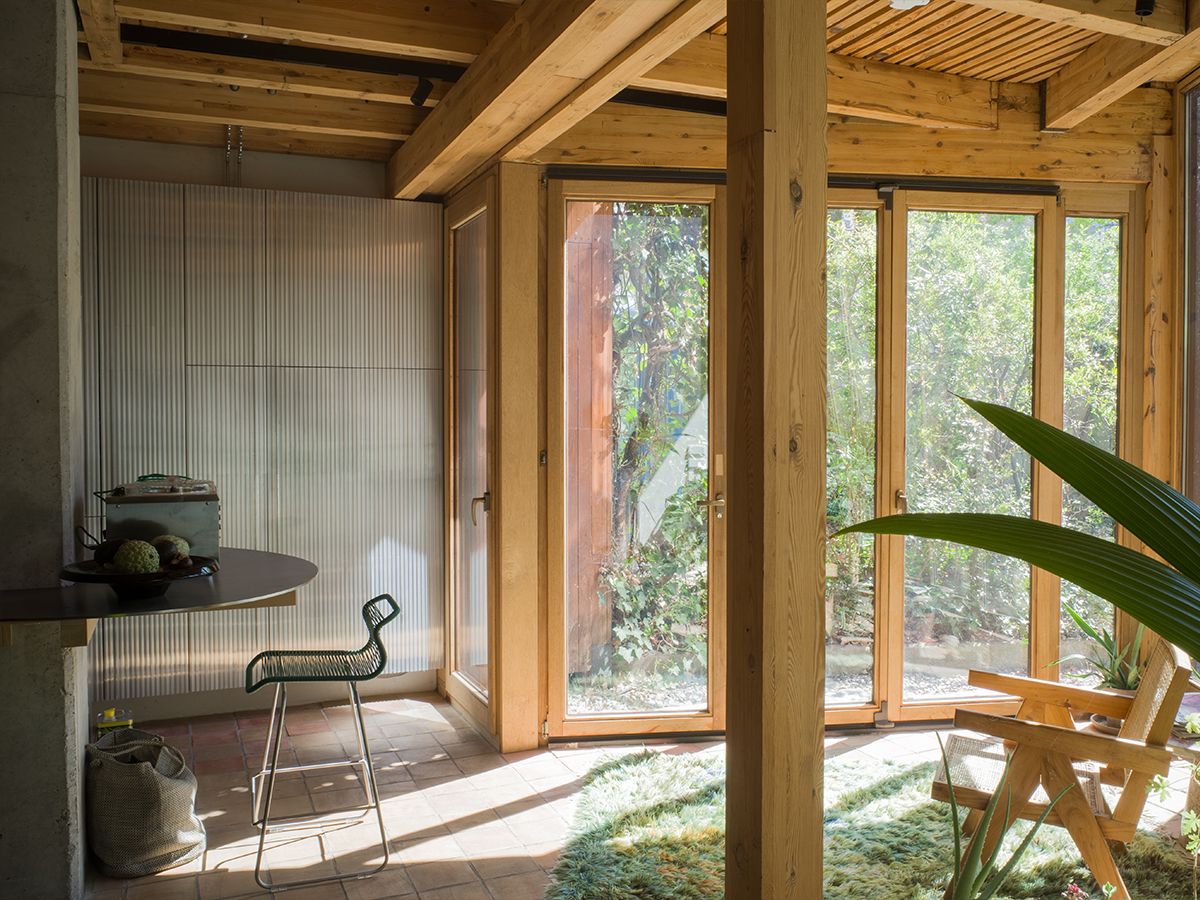
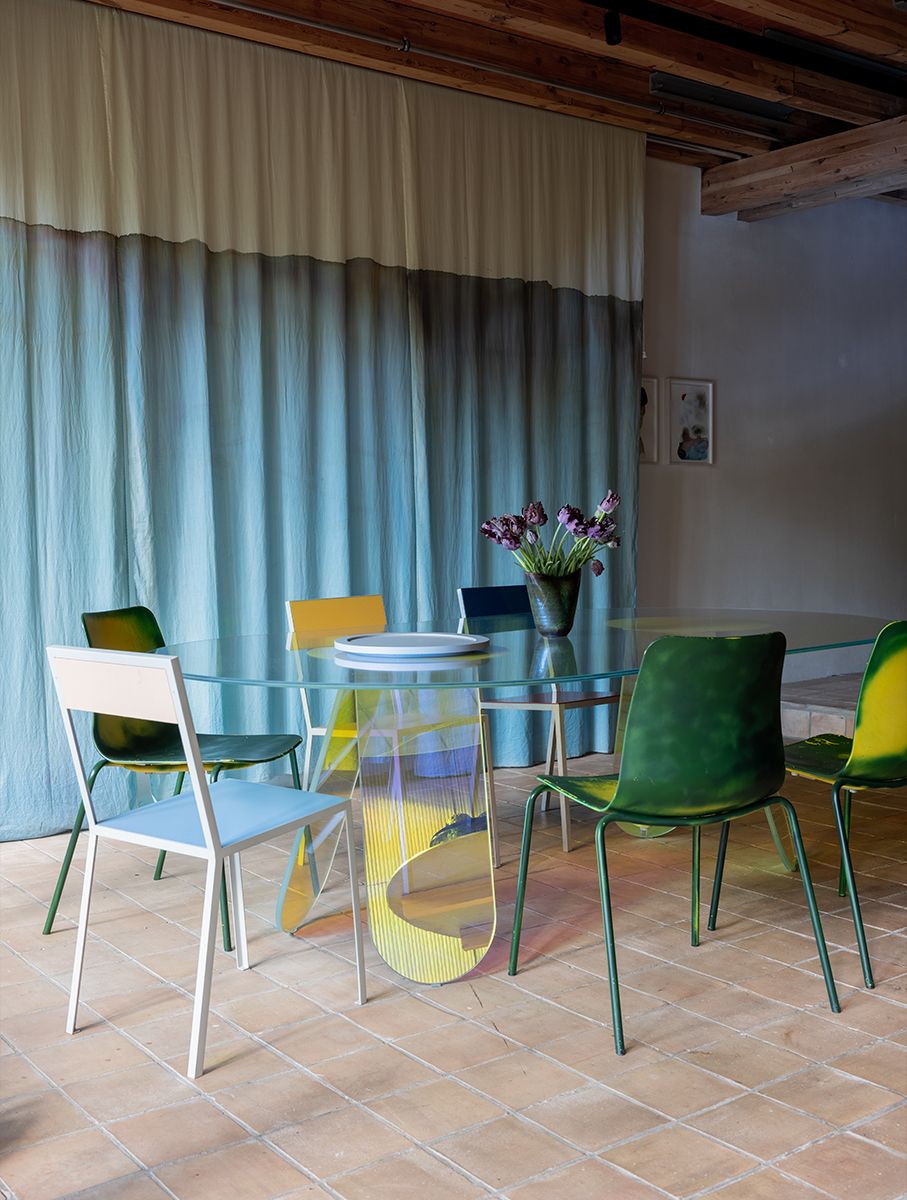
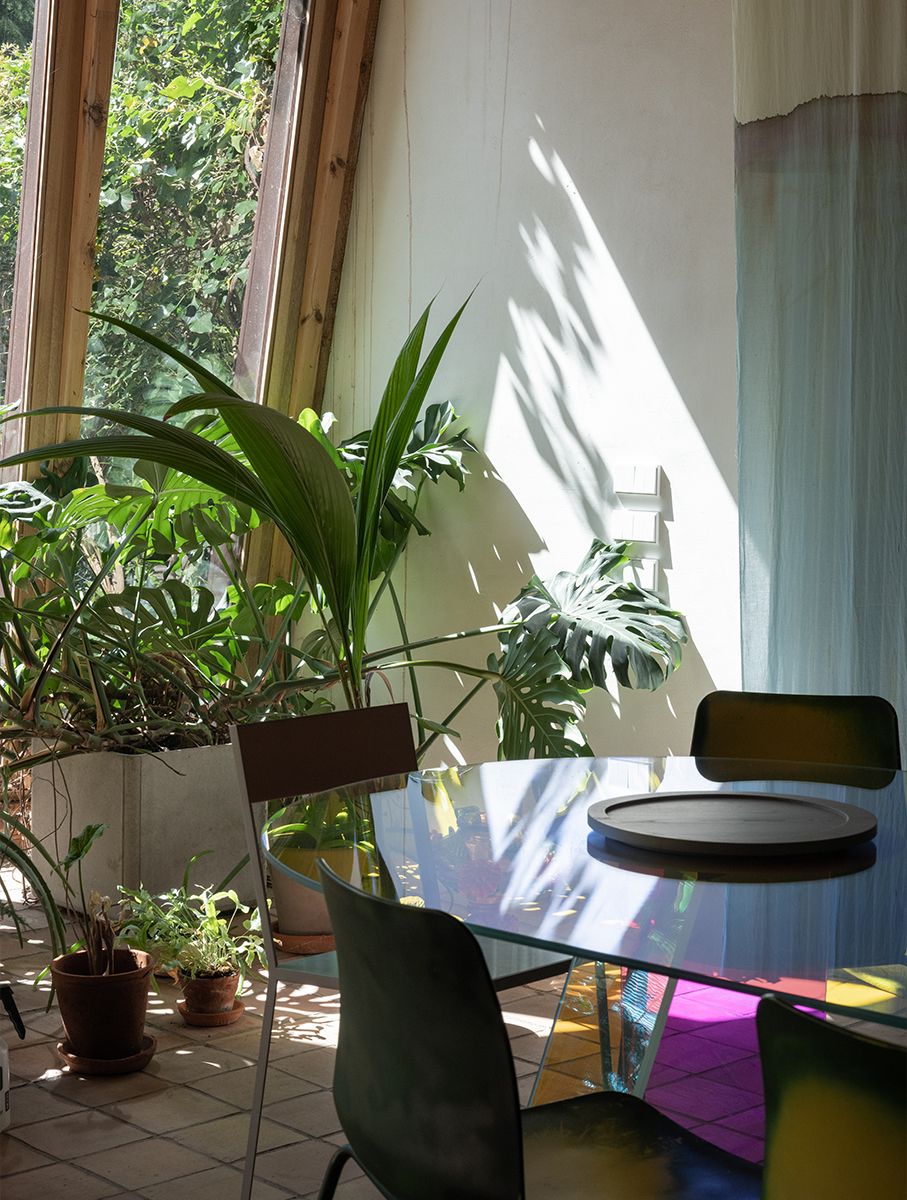
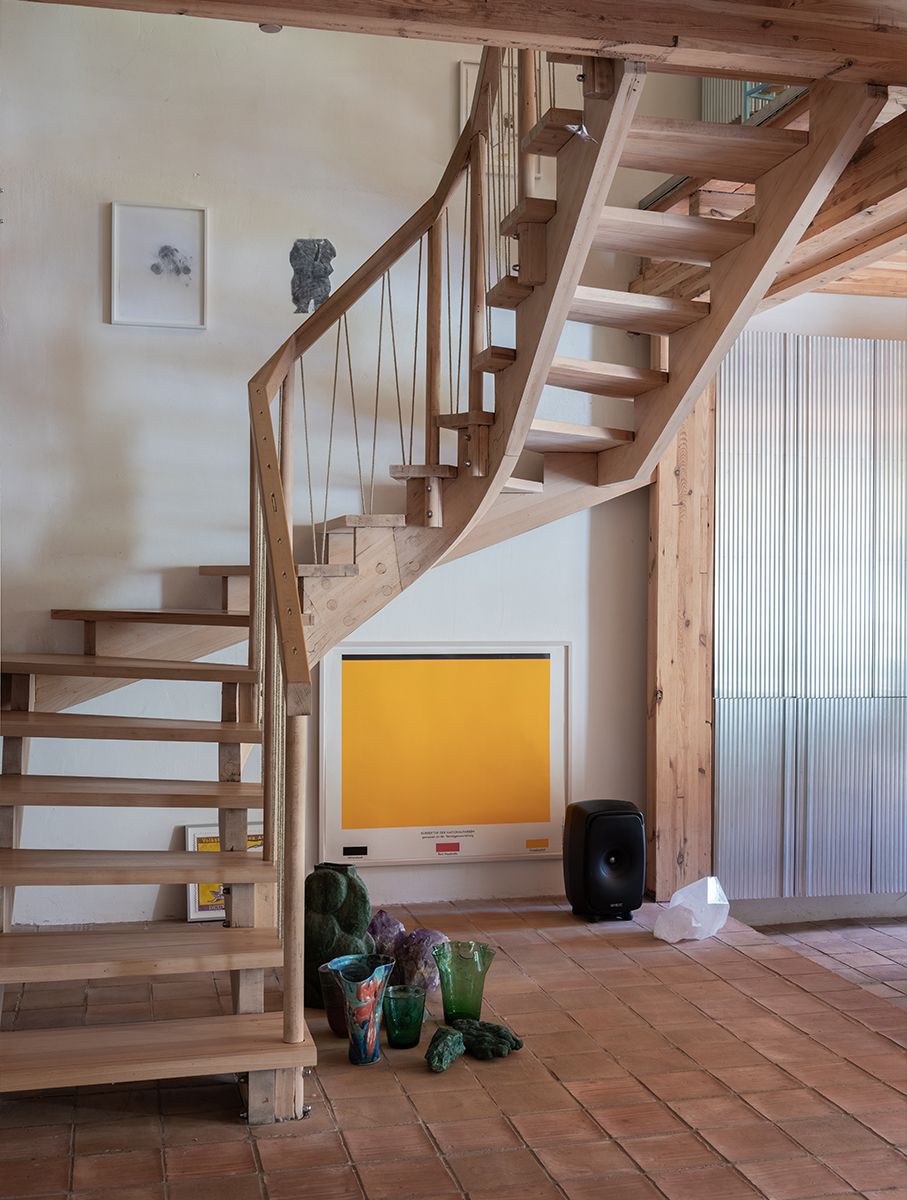
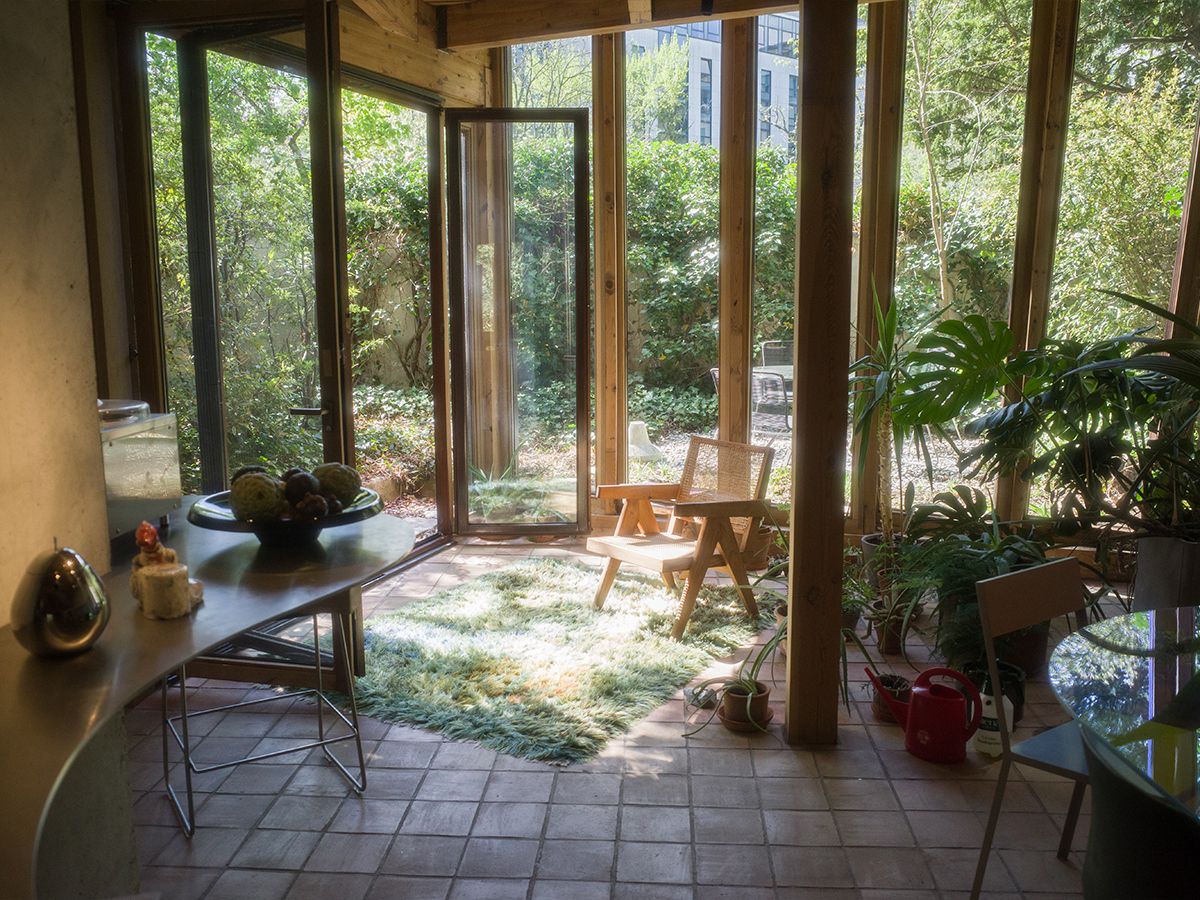
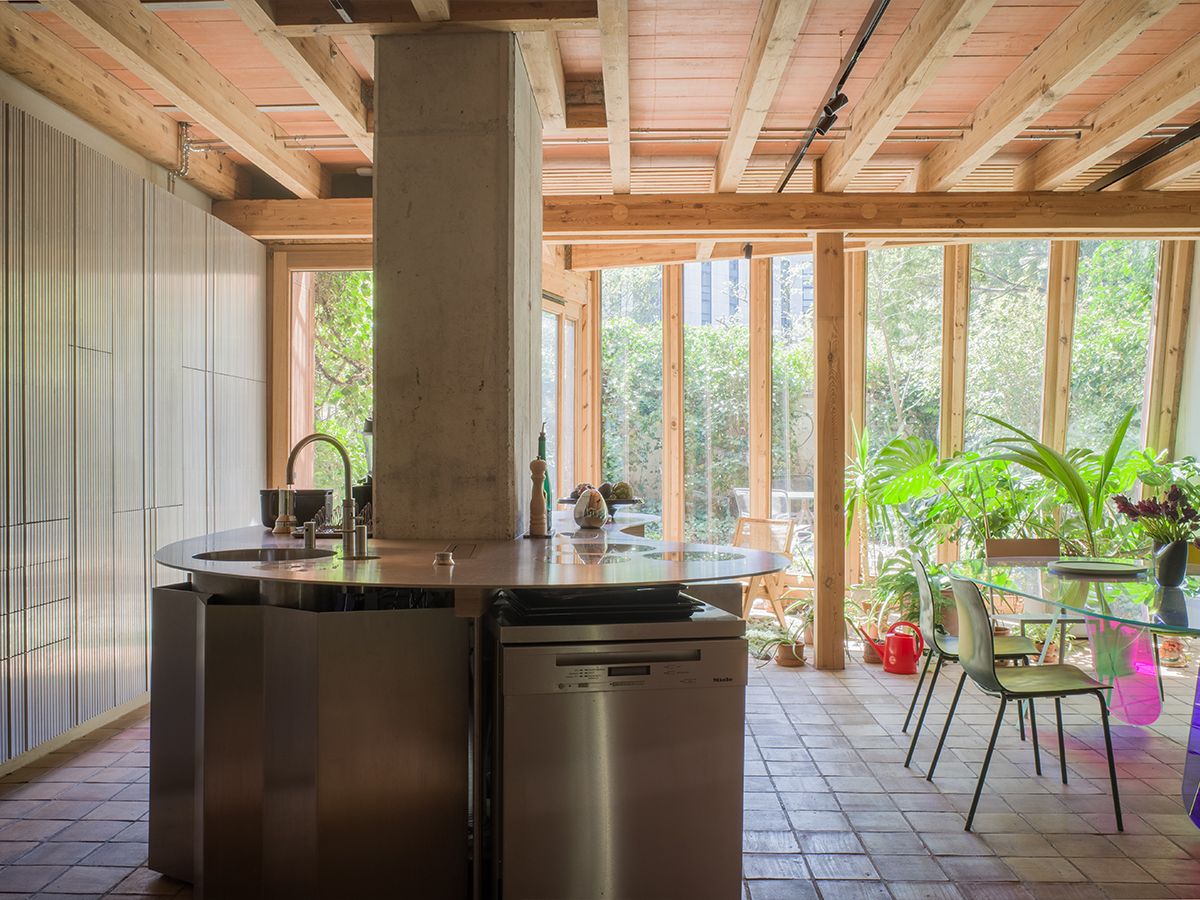
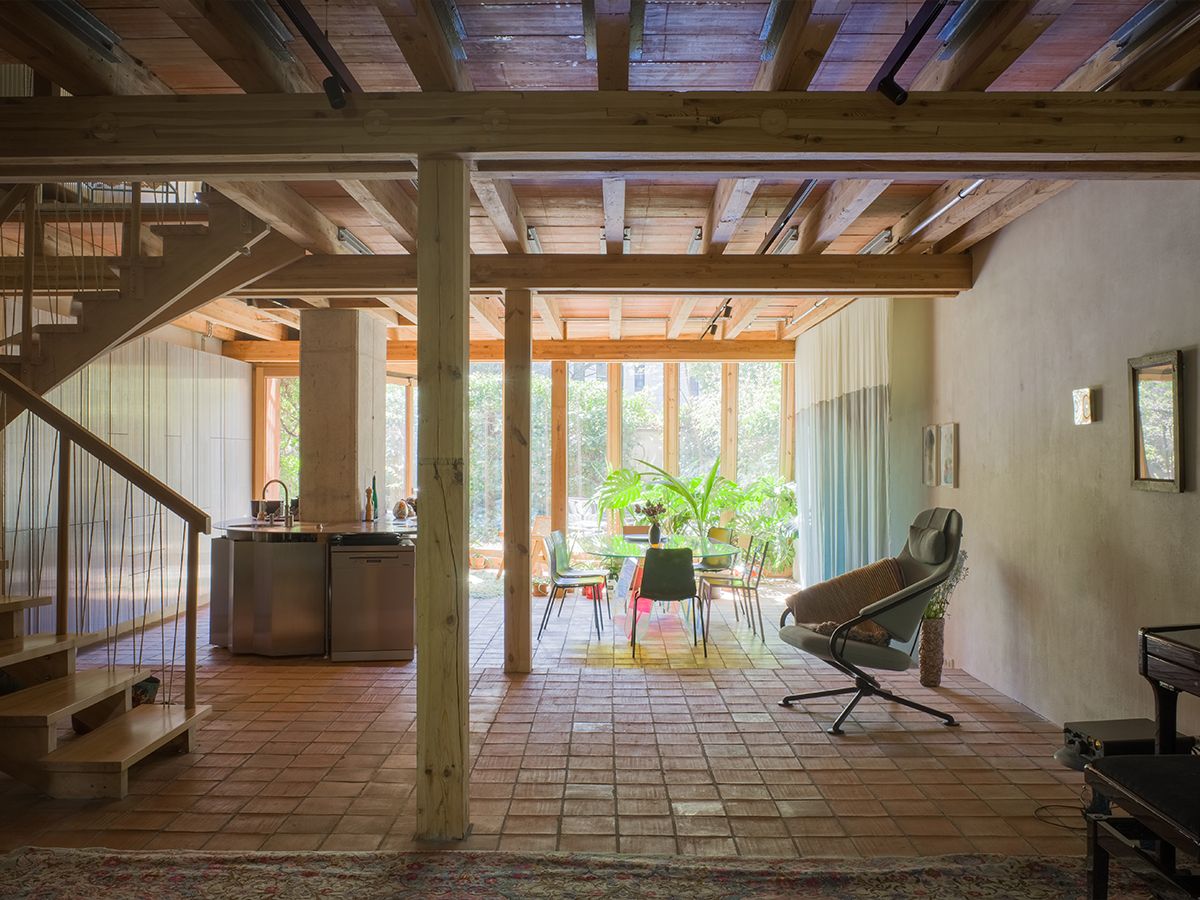
All interior walls demolished, plan fully opened. Frei Otto's concrete columns and Ruprecht's timber skeleton remain visible. A staircase in the centre divides entrance from living area. At the north column: bath and house connections. At the south column: Sam Chermayeff's cantilevered island kitchen. Floor: original 1987 terracotta, gaps filled with new tiles from Brandenburg — colour deviations deliberately scattered. Walls: new clay plaster made from the demolished clay bricks, following the historic mix, painted white.
Upper floor
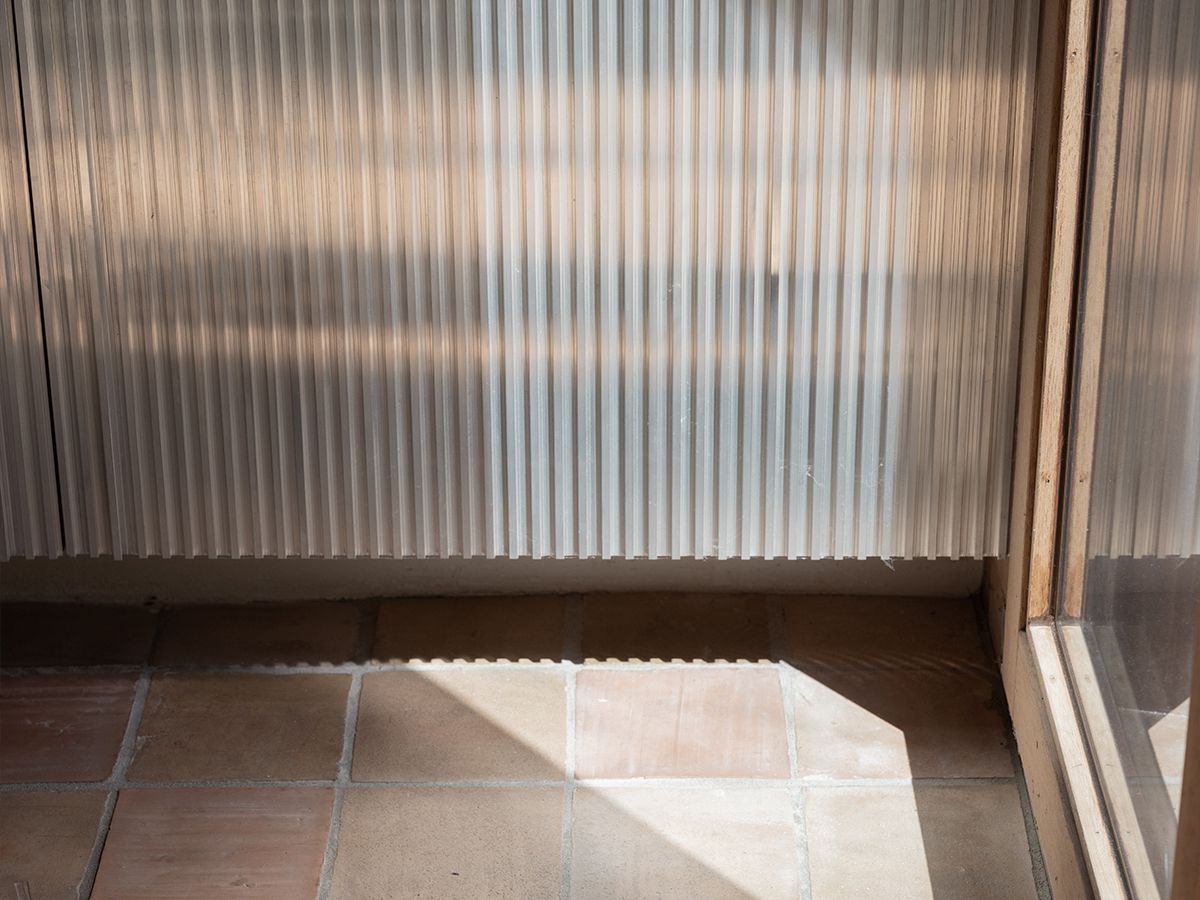
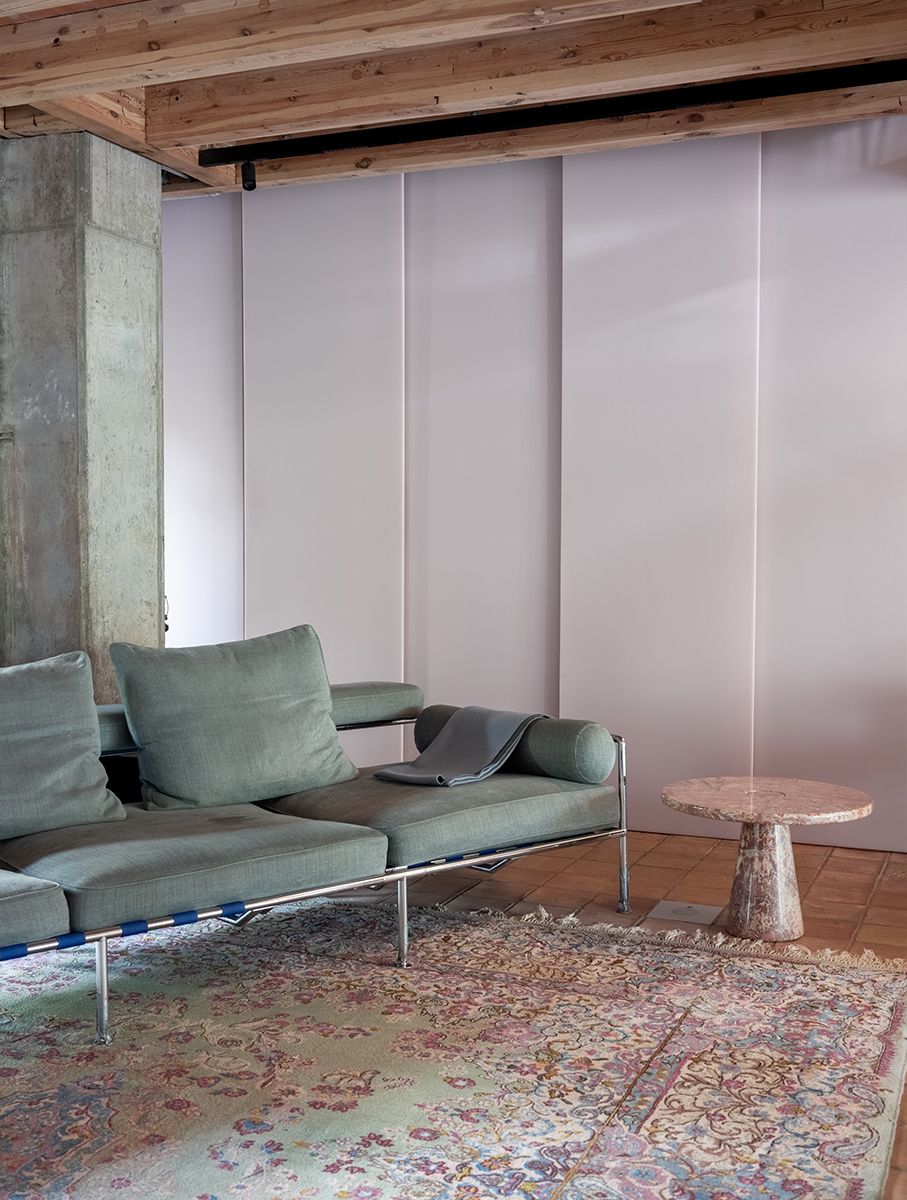
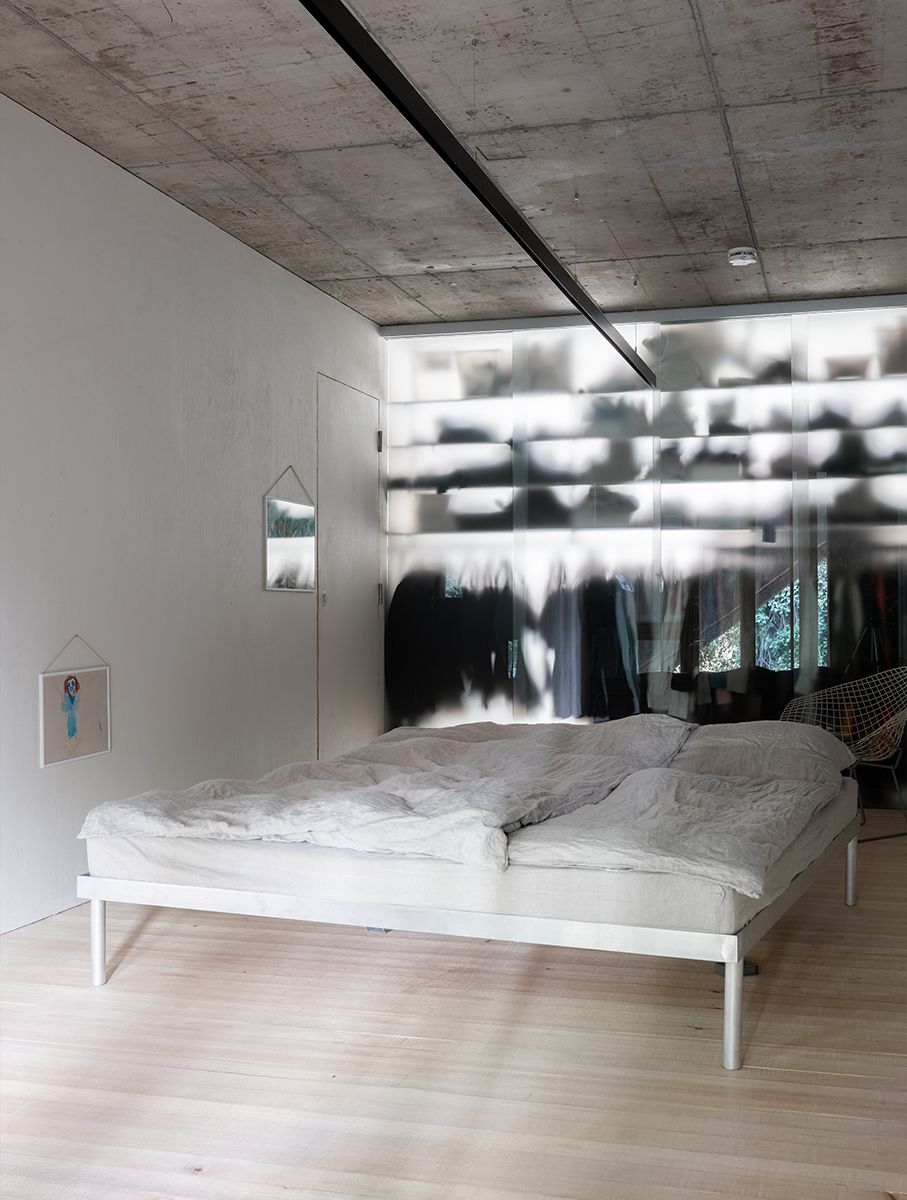
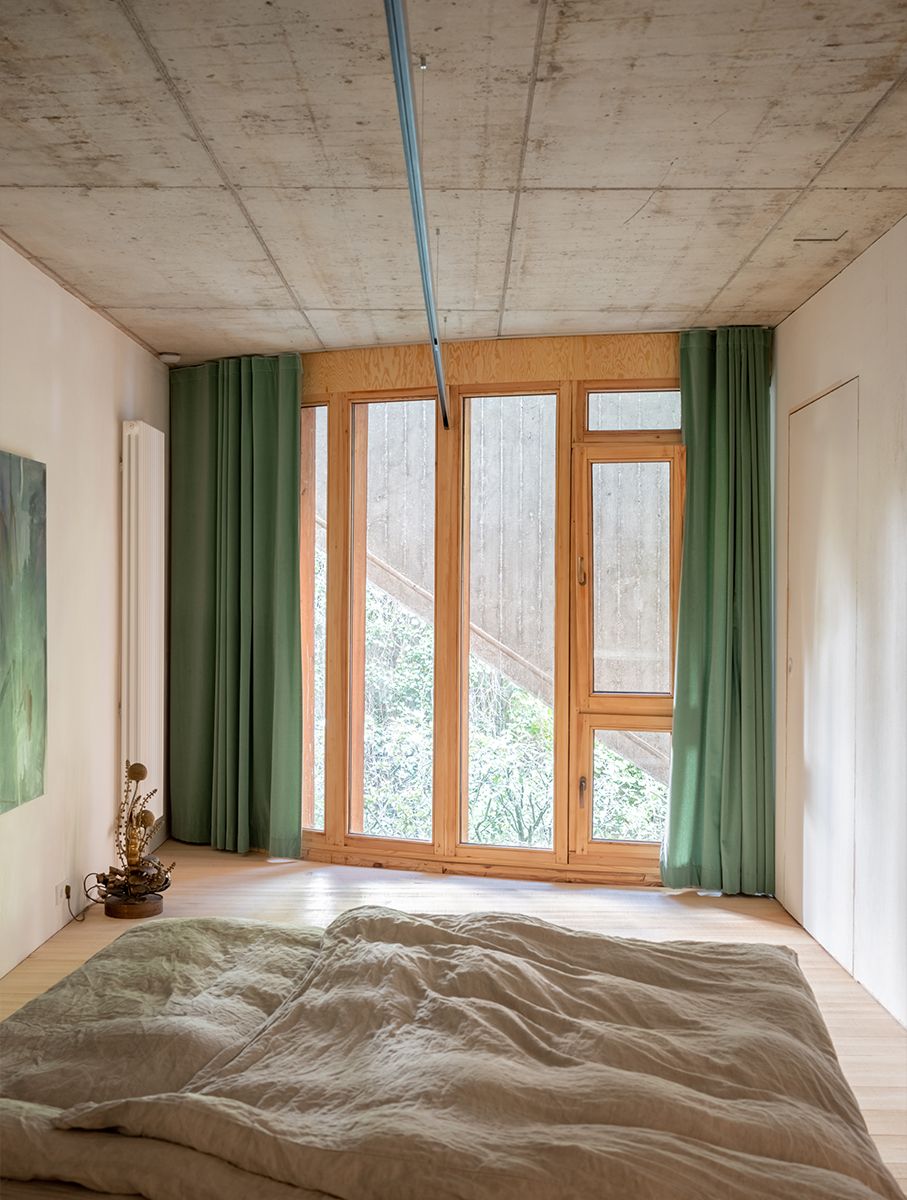
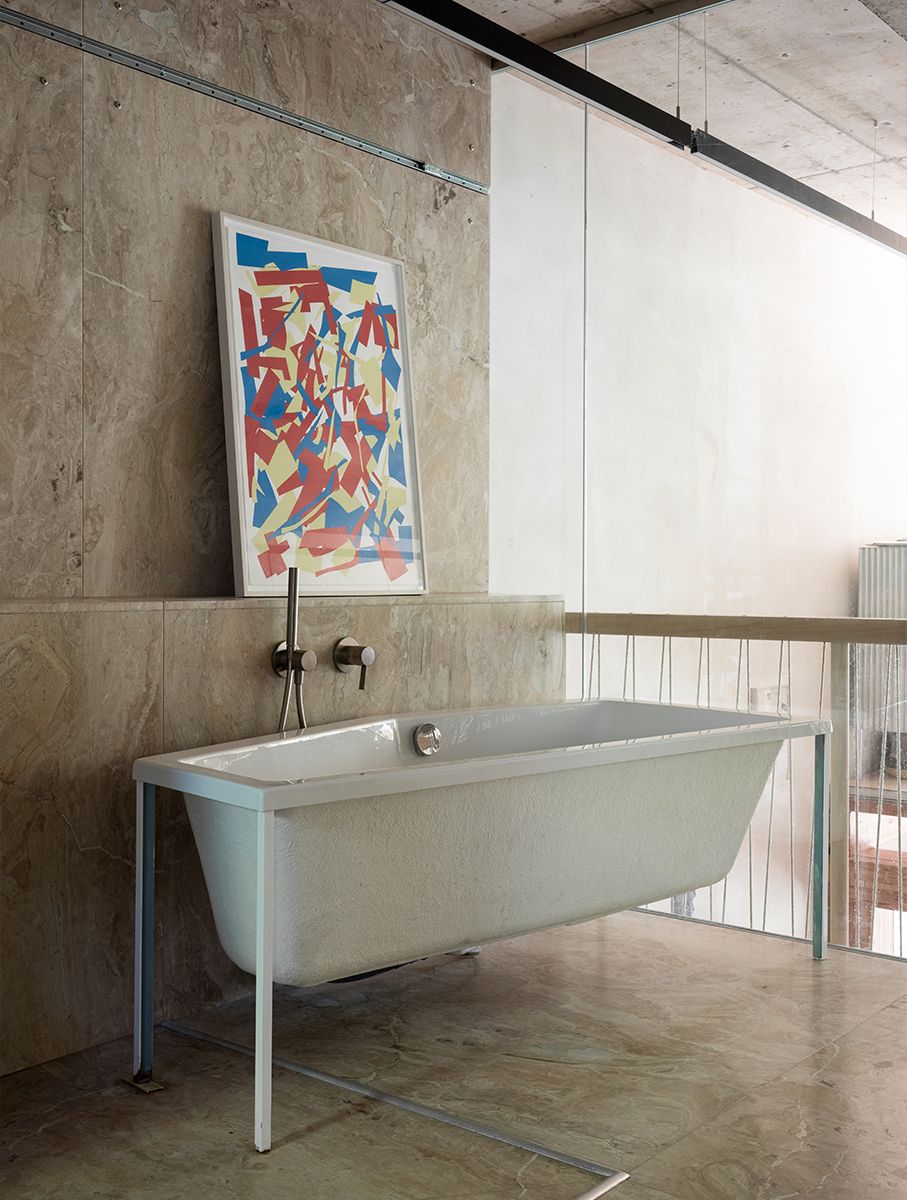
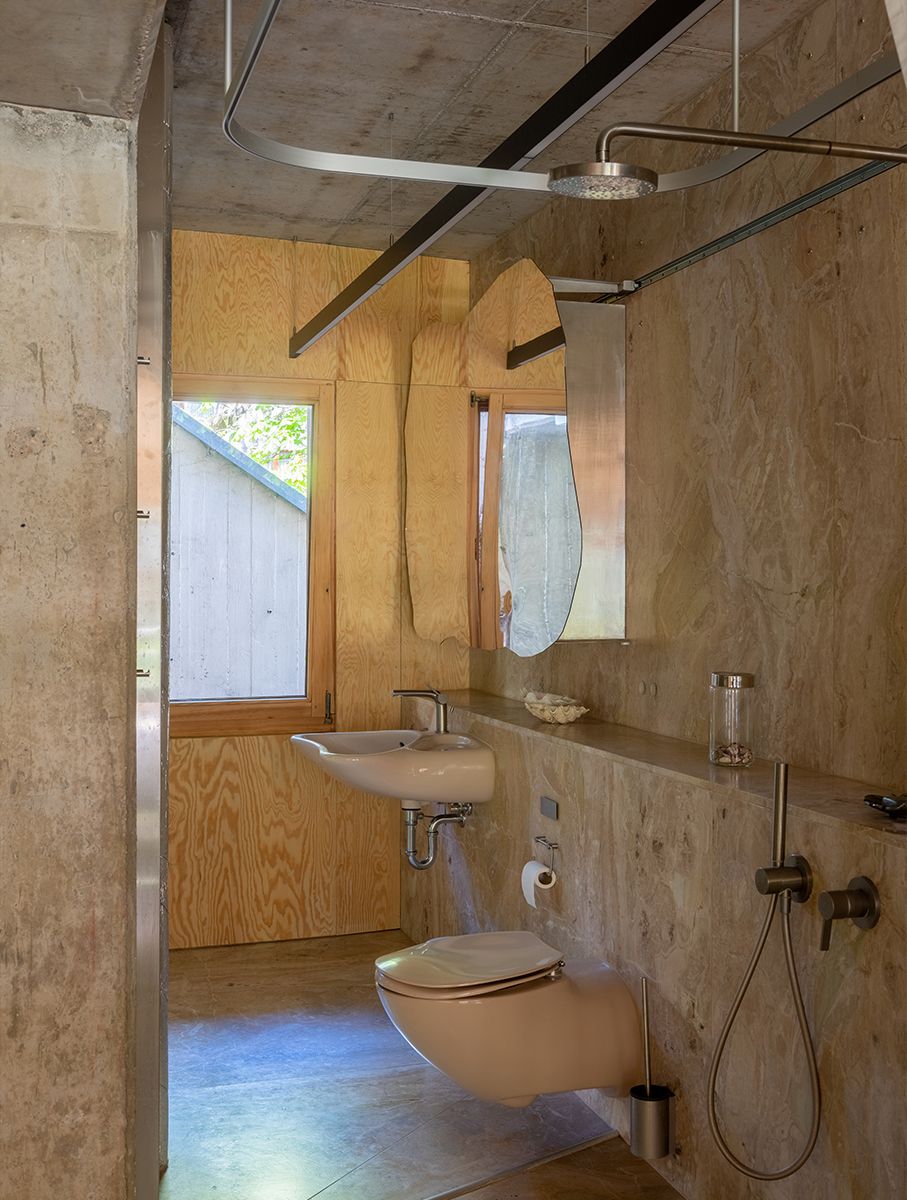
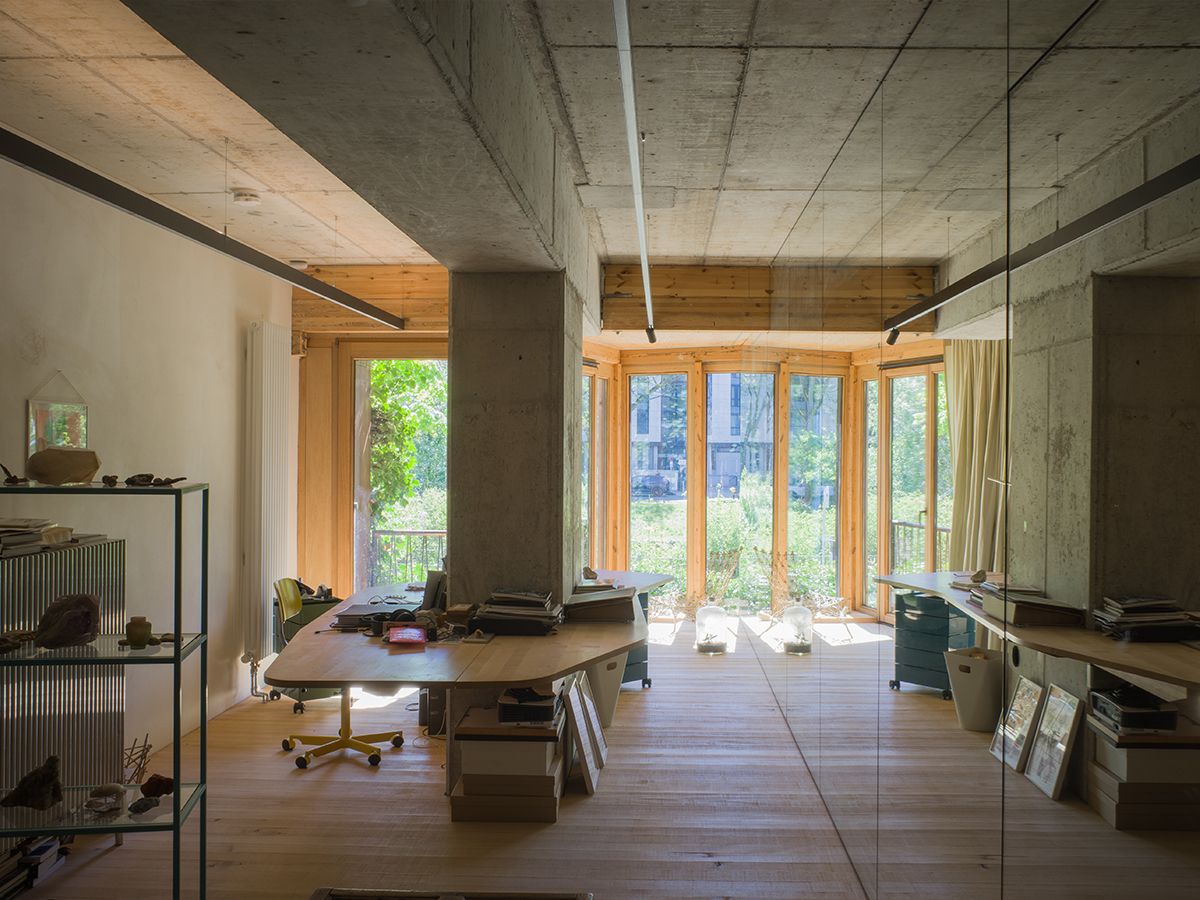
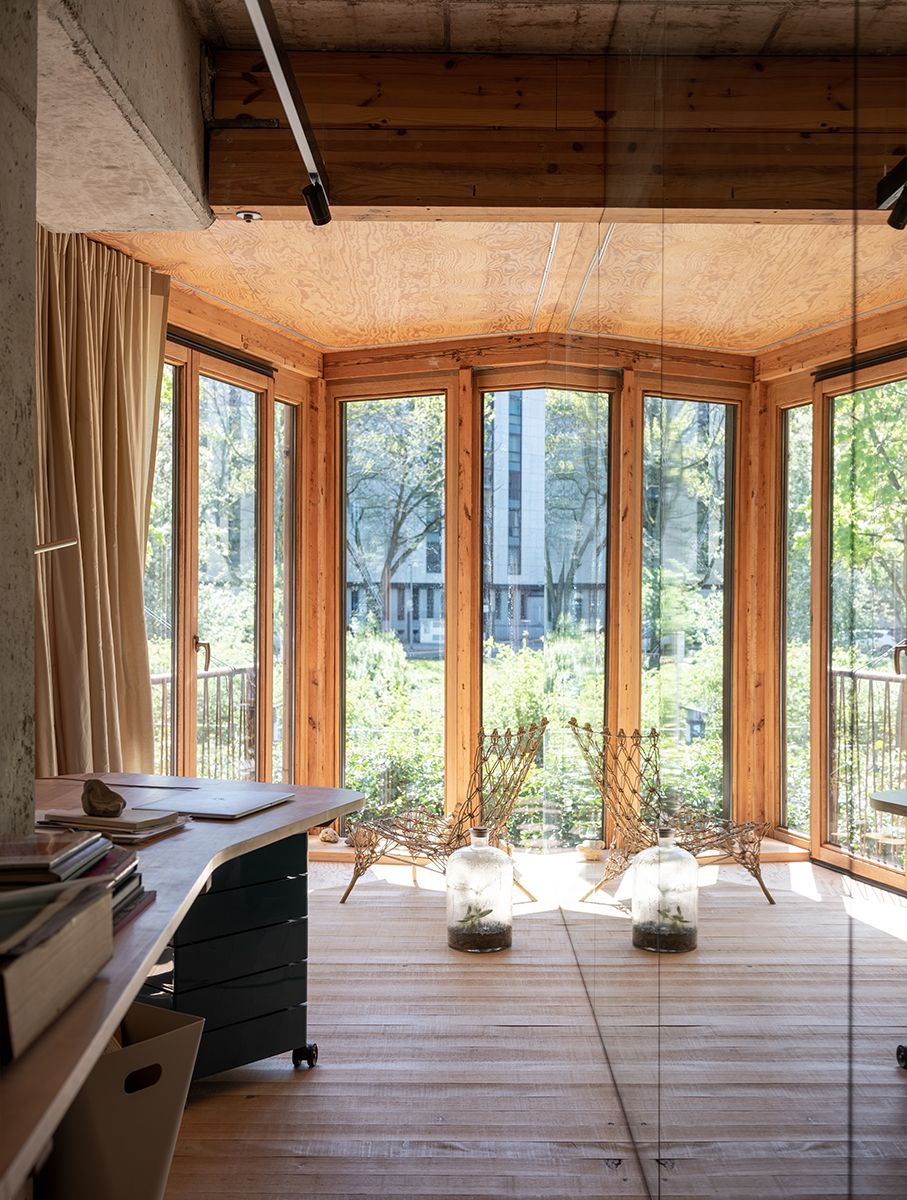
A central longitudinal wall along the full depth, mirrored on one side — throws daylight into the rear areas. Cross-walls in glass. Behind the longitudinal wall: sleeping to the north, children's room to the south, a translucent wardrobe between them as partition. Floor in silver fir, wet zone of the bathroom in marble. Light tracks along the entire length. Above the southern conservatory, a new timber-beam grid in STEICO laminated veneer lumber now closes the floor — the formerly open ground/upper-floor connection is sealed.
Façades
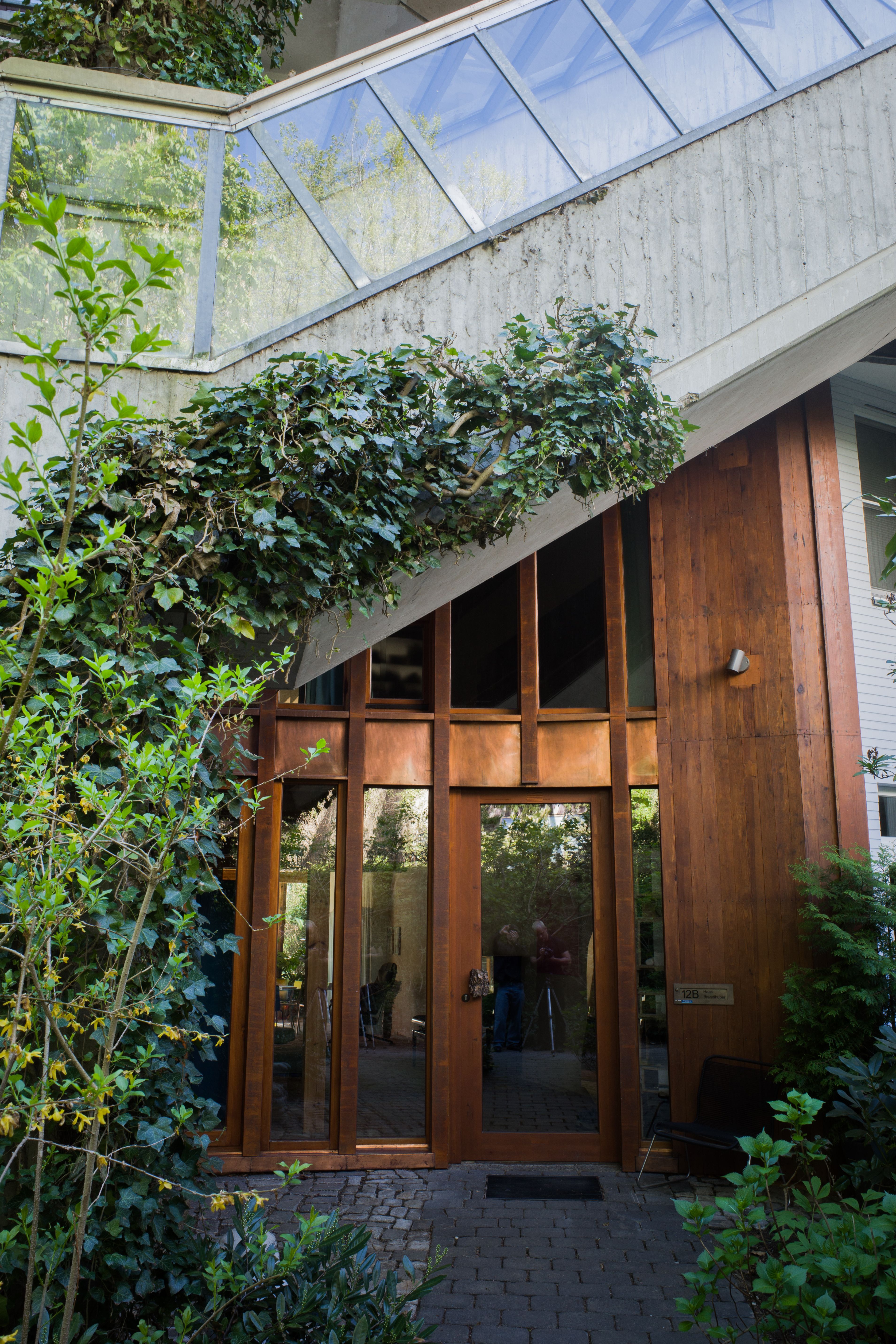
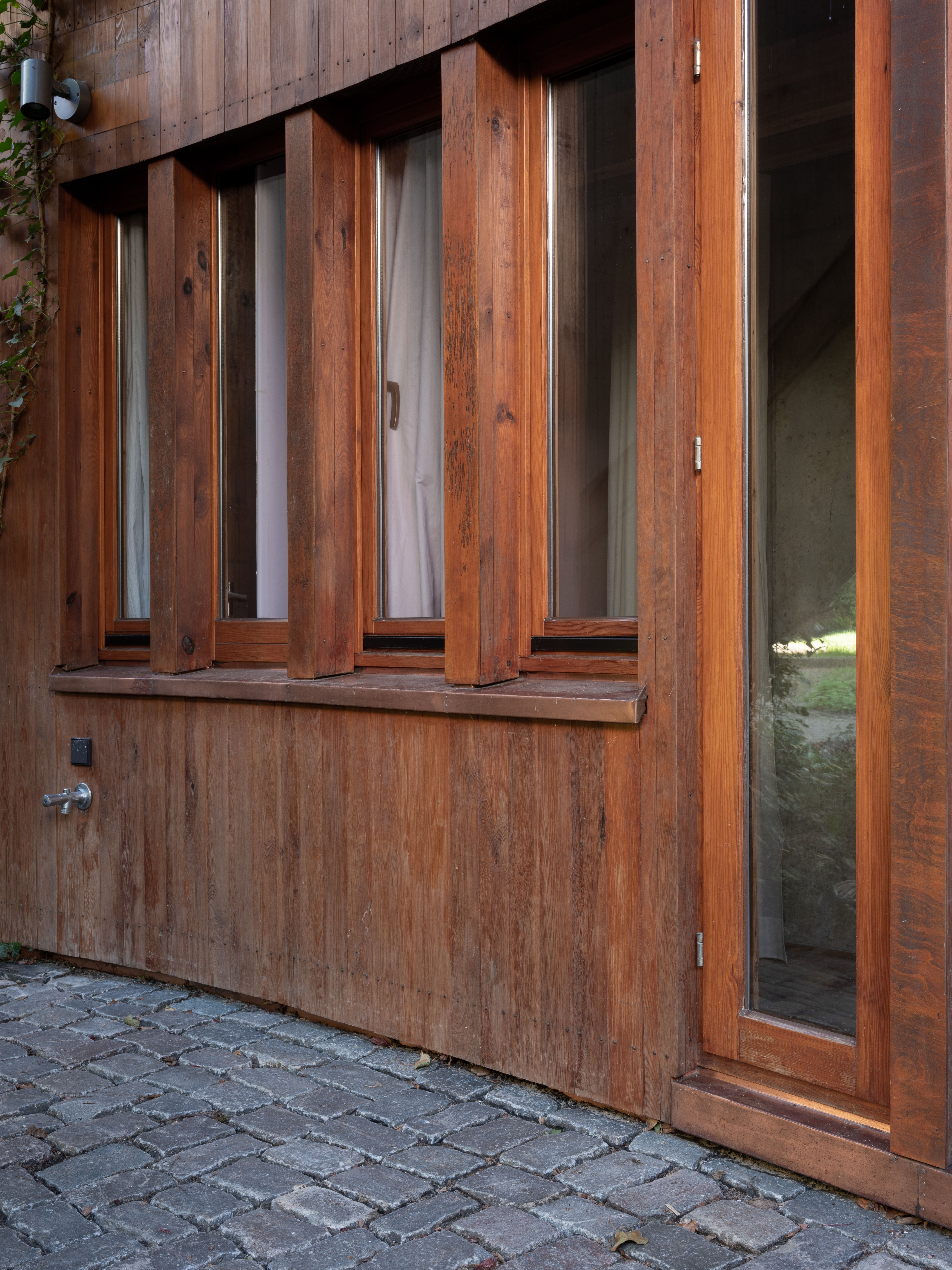
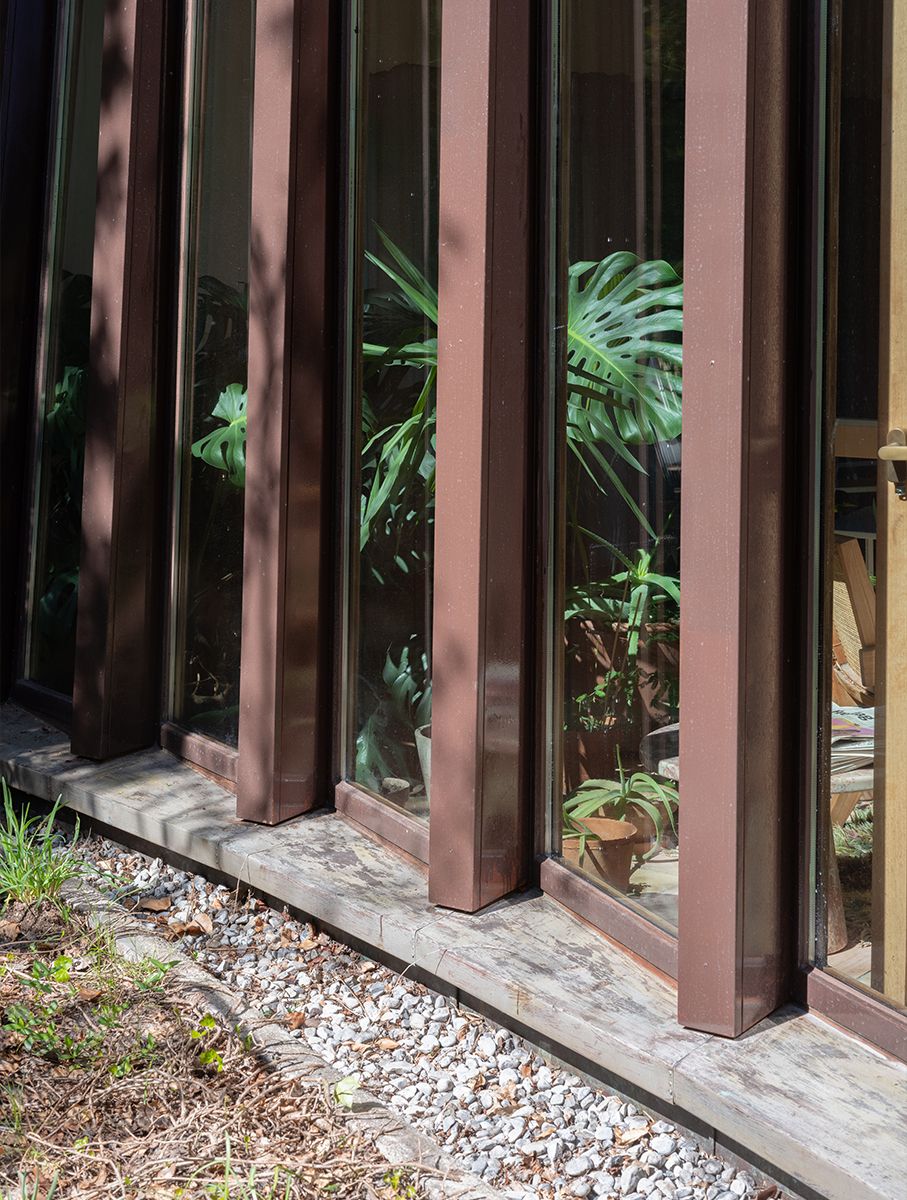
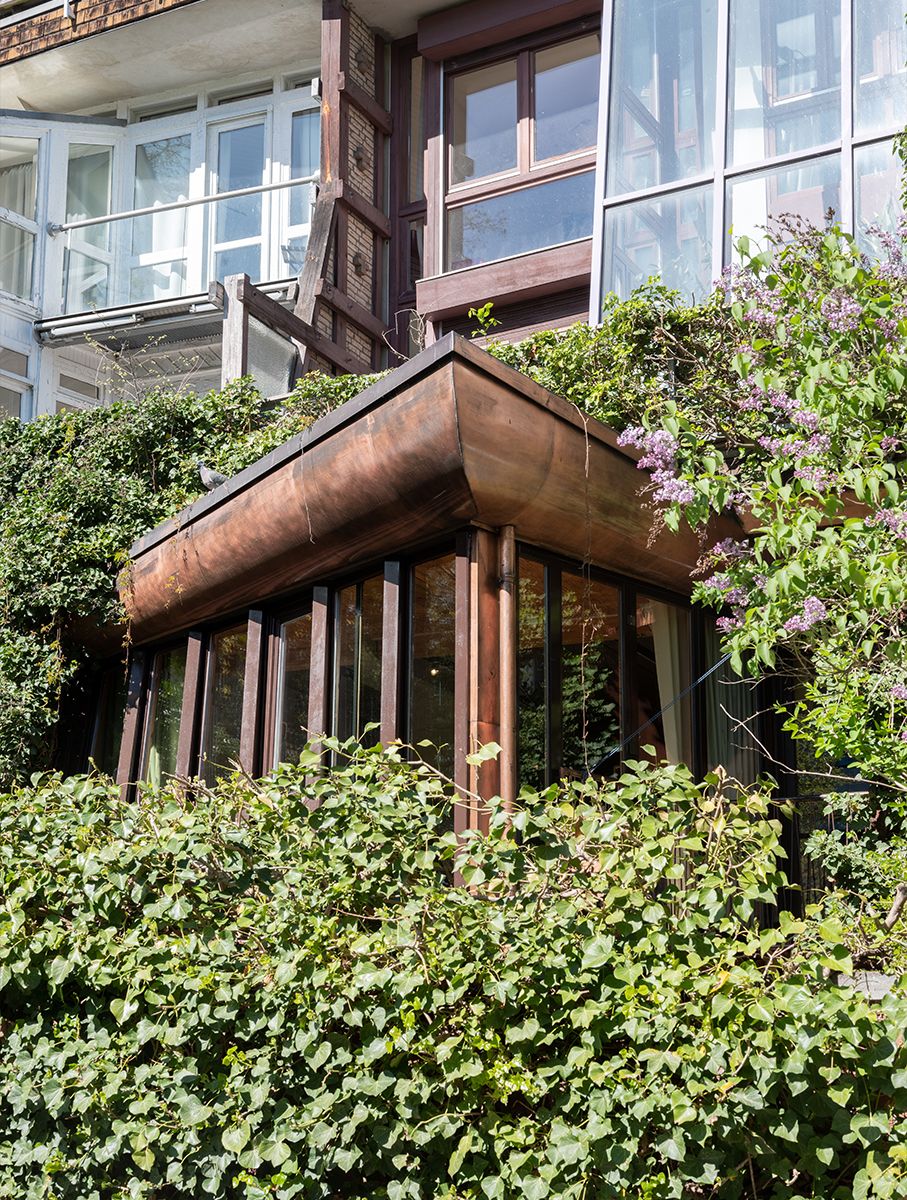
Kept as built. Front door extended by one bay; in the south façade an opening sash added at the children's room.
Tiergartenviertel
South of the Tiergarten, between Cornelius- and Rauchstrasse, in the Embassy Quarter. Directly to the west: the Embassy of Korea. To the south: the Landwehrkanal. To the north, across Rauchstrasse, the IBA urban-villa ensemble.
Tiergarten on foot in five minutes. Mies van der Rohe's Neue Nationalgalerie and the Kulturforum with Scharoun's Philharmonie and Stüler's Gemäldegalerie ten minutes on foot. Bauhaus-Archiv around the corner. Restaurants and cafés along Potsdamer Strasse all the way to Schöneberg. U-Bahn stations Mendelssohn-Bartholdy-Park and Kurfürstenstrasse within walking distance. Hauptbahnhof in ten minutes. BER Airport in 35–50 minutes. You can't live better in Berlin.
Living Icon
The Ökohaus is utopia, existing in real. Planned in 1984 for a serene future. It is an experiment — and as an experiment, succeeded. The question of how city and nature, private home and community, concrete and clay can function together it has been holding open since 1987. Whoever takes over Unit 3 takes over a rare dual authorship: Frei Otto in the structure, Brandlhuber+ and unprofessional.studio in the second layer, Sam Chermayeff in the kitchen.
Location and law. Tiergartenviertel is to Berlin what Brera is to Milan or Bayswater to London — sparse, quiet, close to park and museum, without tourist traffic. The Erbbaurecht on table and plot stabilises everything: no land speculation, no change of ownership of the shared substance.
Substance and market. The Ökohaus is a work by Pritzker laureate Frei Otto, currently moving towards heritage protection — see the already-listed urban villas in the immediate neighbourhood. Comparable units within the ensemble currently move between €7,500 and €9,500 per m². Anyone who enters the house sees immediately why.
Ground floor (92.39 m²):
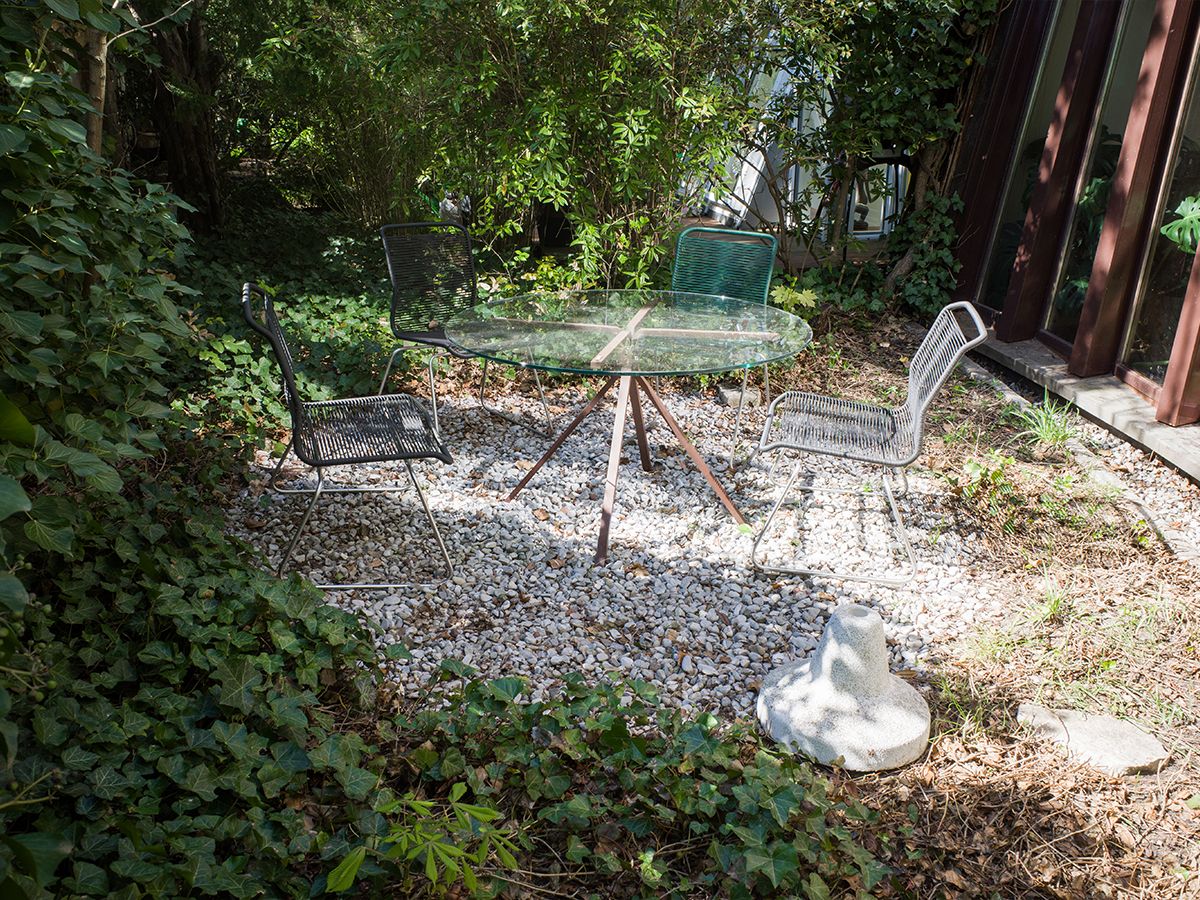
Entrance, hall, living, dining, kitchen / utility, bath, WC, laundry, buffer zone, southern conservatory with ground-level terrace access, share of the staircase.
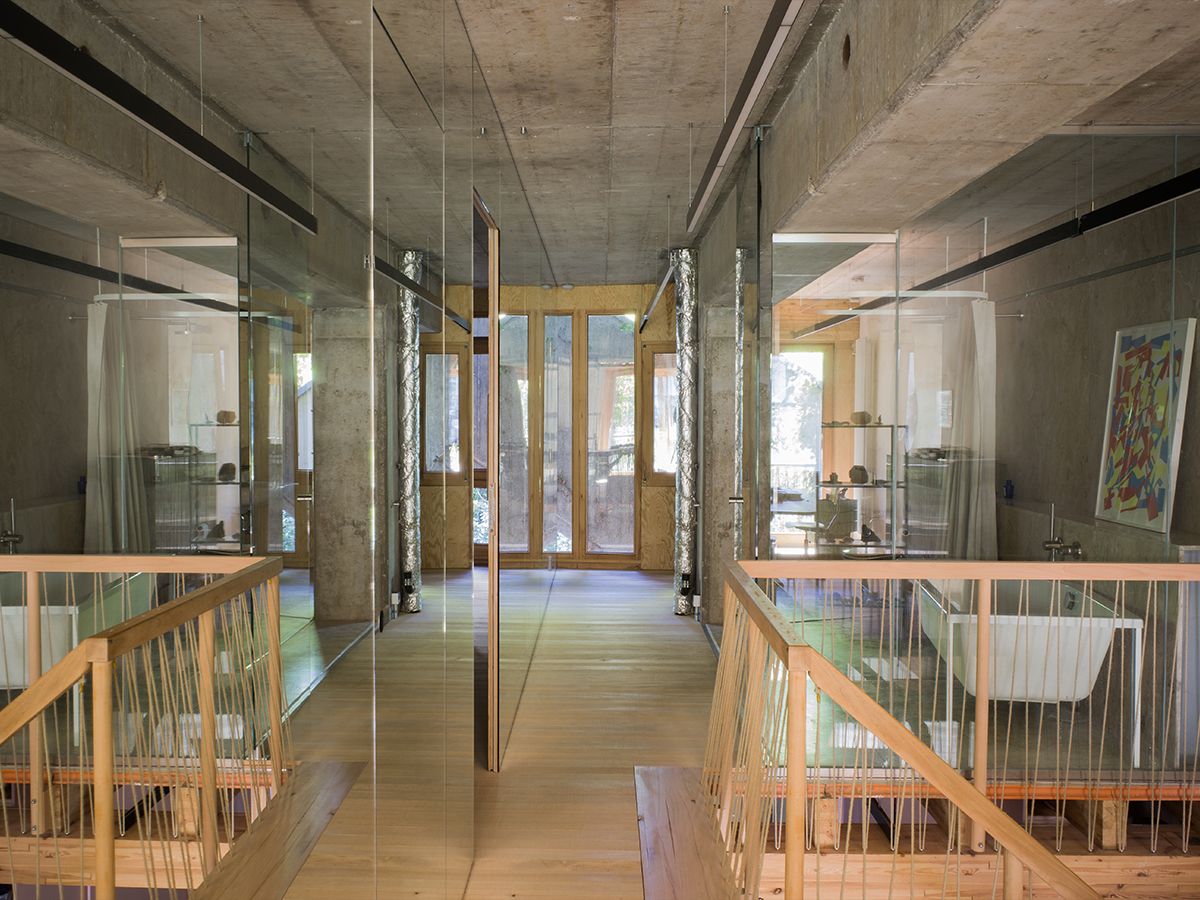
Upper floor (87.93 m²):
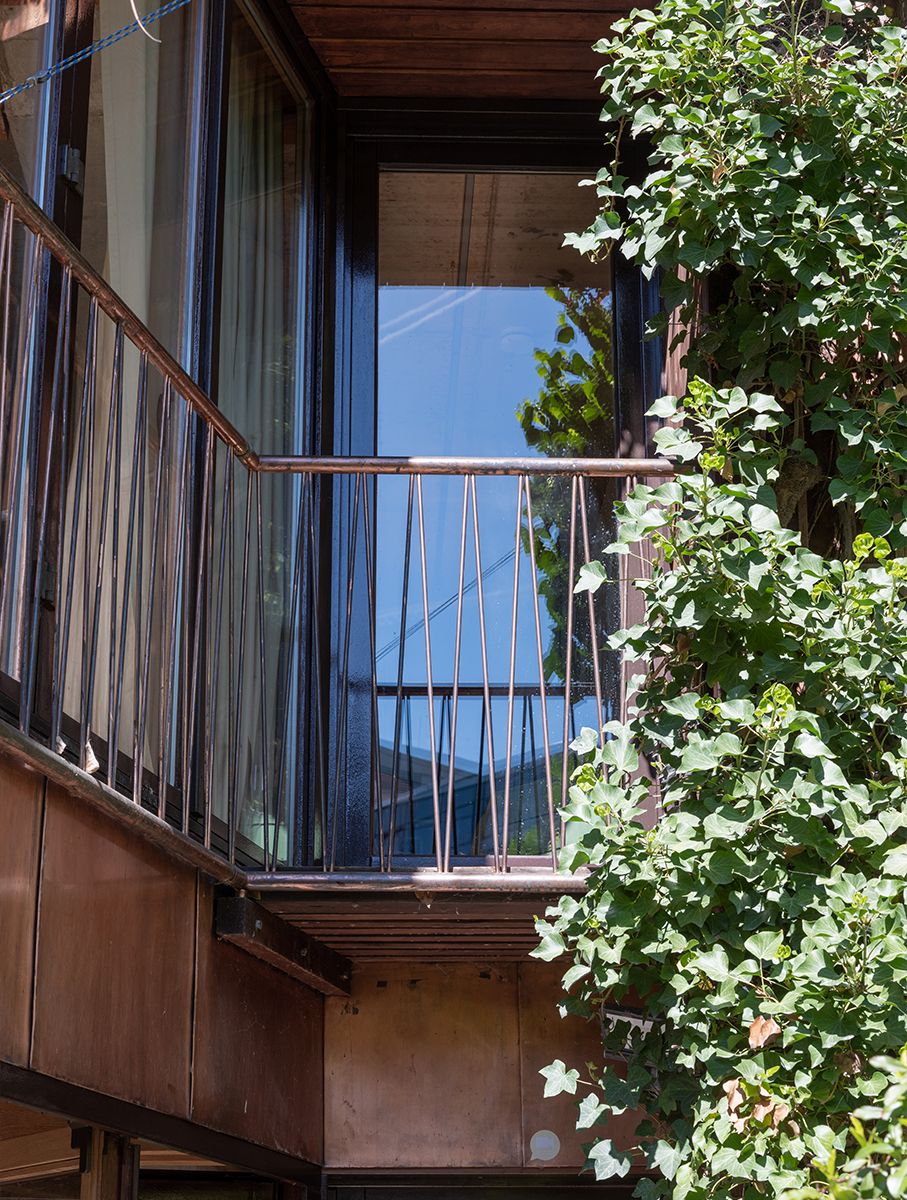
Sleeping with dressing area, bathroom with marble wet zone, WC, anteroom, storeroom, corridor, study, southern conservatory, balcony.